
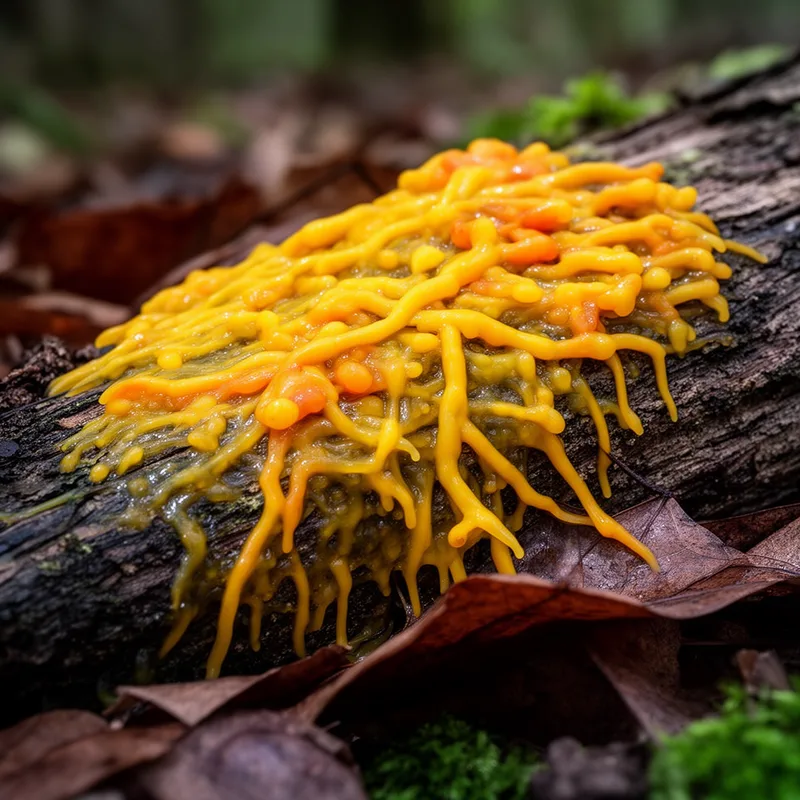
class Myxomycetes
- noun
- /klæs mɪksoʊˈmaɪsɪtiz/
- Specialized
- Slime molds in the class Myxomycetes can form large, visible colonies during certain stages.
Examples
-
The class Myxomycetes is studied for its unique lifecycle and movement.
-
Scientists have discovered new species within the class Myxomycetes in tropical forests.
-
The class Myxomycetes includes fascinating organisms.
-
Did you know that the class Myxomycetes is often studied in biology?
-
Scientists have discovered new species within the class Myxomycetes in tropical forests.
-
Slime molds in the class Myxomycetes can form large, visible colonies during certain stages.
-
The class Myxomycetes is studied for its unique lifecycle and movement.
Synonyms

A group of fungus-like living things called slime molds
Surface Forms
Morphology
The noun phrase combines the general noun 'class' (a category) with the taxonomic name 'Myxomycetes', so its meaning — the biological class called Myxomycetes — follows directly from the constituents. This is a standard compositional scientific naming pattern found across languages, so a B1 learner who knows both words would readily understand it.
Etymology
Class Myxomycetes gets its name from Greek roots: myxo- meaning 'slime' and -mycetes meaning 'mold' or 'fungus'. These organisms often form slimy, mold-like masses, so the name points to the group we call 'true slime molds'.

