
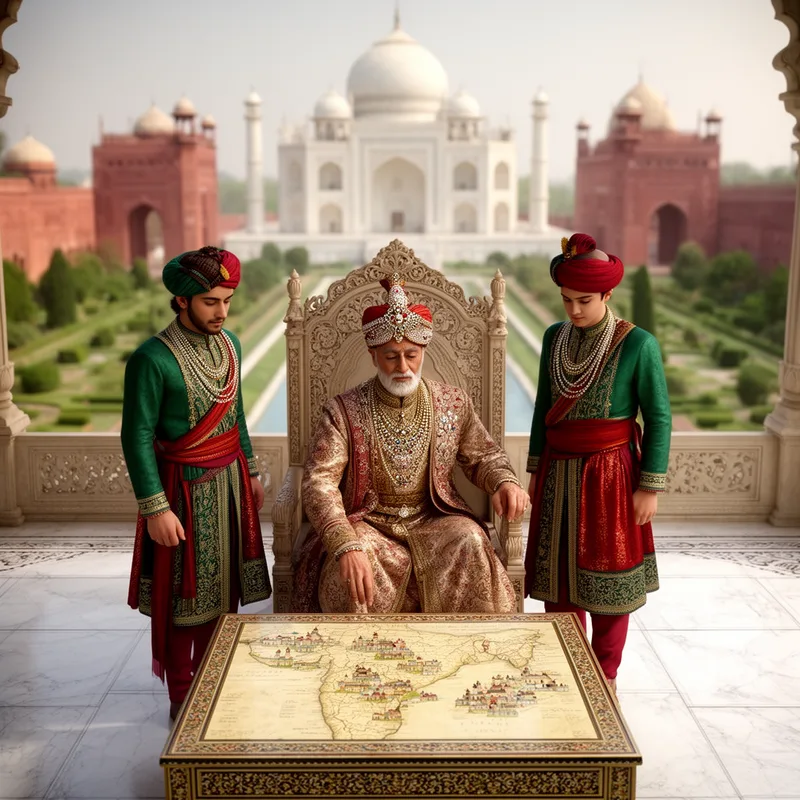
Mughal


 1
8.1
- proper noun
- /ˈmʊɡəl/
- It cannot be understated what a global Titan the Mughal Empire was.
Examples
-
The new Mughal leader Akbar was just thirteen years old, but his guardian by Ram Khan was a capable commander.
-
You know... this is Mughal.
-
Who was behind this ferocious and seemingly unstoppable Mughal empire?
-
" Inquisitive, vital, and awake to her own possibilities, Hannah travels to Mughal, India, with her husband, an English trader.
Blog text (26) -
The Mughal Empire was known for its remarkable architecture, including the Taj Mahal.
-
Akbar the Great was a prominent ruler of the Mughal dynasty, celebrated for his administrative reforms.
-
Art and culture flourished during the Mughal period, leaving a lasting impact on South Asian history.
Synonyms
 1
9.6
A ruler from the Muslim royal family who led large parts of India in the 1500s to 1700s
 1
7.2
An empire in India ruled by Mughal conquerors from 1526 to 1857
Surface Forms
Etymology
Mughal comes from the Persian Mughul, which originally meant 'Mongol', people from Central Asia who later became rulers in India. So Mughal can mean the empire itself or a member of that ruling family.