
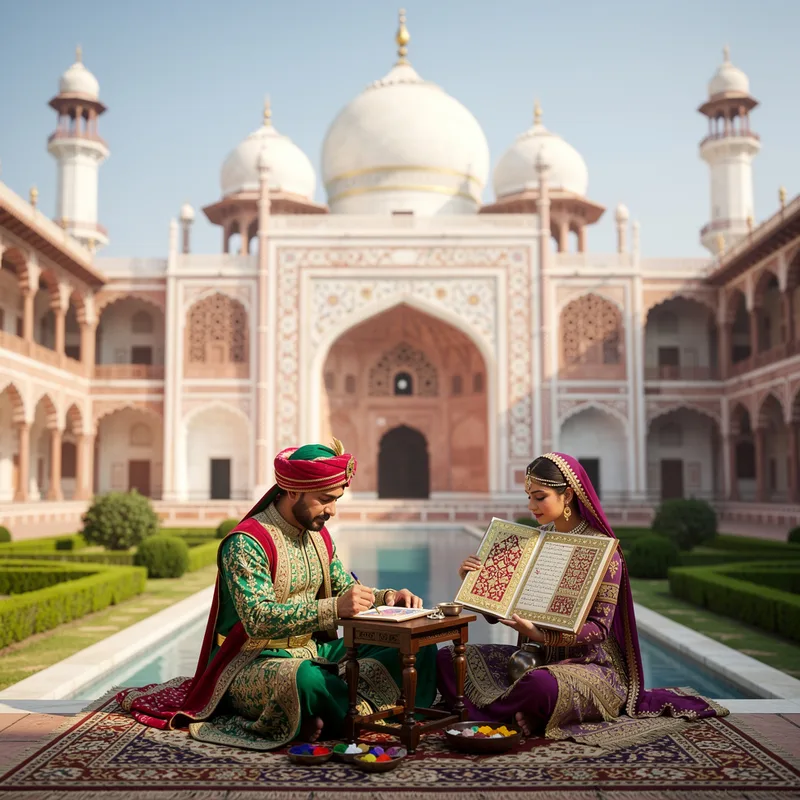
Mughal
 1
8.2

- adjective
- /ˈmʌɡəl/
- Your big chance to live like a Mughal Emperor—at least for one night.
- Mughal Empire
- Mughal Emperor
- Mughal court
Loading YouTube…
Watch on YouTubeIn Persian poetry, which was widely read at the Mughal court, Ruby symbolized the rising and the setting sun.
- In Persian poetry, which was widely read at the Mughal court, Ruby symbolized the rising and the setting sun.
Examples
-
The City Palace in the heart of the old city is a blend of Rajasthani and Mughal architecture.
Academic text (2009) -
The founder of the Mughal dynasty is buried in Kabul, while his grandson and son are buried in Lahore!
Blog text (25) -
Meet my new Mughal painting.
-
Actually, the Mughal Empire had not even been established when the Europeans arrived.
Academic text (2000) -
A Mughal coin, Your Majesty.
-
We were considering the glories of the Mughal Empire.
-
The collection contains kurtas, shirts, and jackets which have been inspired by Mughal Royalty.
Blog text (16) -
The mausoleum was completed in 1638 and was intended as a monument to Mughal emperor Shah Jahan's favorite wife, Mumtaz Mahal.
Blog text (21) -
At Isa Khan's Tomb in Delhi, archaeologists have revealed the oldest known Mughal "sunken garden," or a garden planted below the level of walkways and the tomb building.
Academic text (2011) -
The City Palace in the heart of the old city is a blend of Rajasthani and Mughal architecture.
Surface Forms
Etymology
Mughal comes from the Persian Mughul, which originally meant 'Mongol', people from Central Asia. So Mughal as an adjective describes the art, buildings, or culture made by the rulers and their courts in South Asia.