

Mount Vesuvius


 1
4.4
1
4.4
- proper noun
- /maʊnt vəˈsuːviəs/
- That is a picture of Mount Vesuvius in eruption, which gives you an idea of the impact that our new television show is going to have.
- the eruption of Mount Vesuvius
Examples
-
Tourists often hike to the summit of Mount Vesuvius for a breathtaking view of the surrounding area.
-
Vito was born, really, in a small town on the side of Mount Vesuvius.
-
That's Mount Vesuvius.
-
They inferred a correlation between the times of earthquakes and the times of major eruptions of Mount Vesuvius.
Academic text (2002) -
People flock to see the beauty and history of Mount Vesuvius, a famous volcano in Italy.
-
Mount Vesuvius erupted in A.D. 79, leading to the destruction of the towns of Pompeii and Herculaneum.
Synonyms
 9
6.5
9
6.5
A volcano near Naples in southwest Italy that erupted in AD 79 and buried Pompeii and Herculaneum
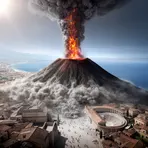
A volcano in southwest Italy that buried Pompeii and Herculaneum in AD 79
Surface Forms
Morphology
The phrase is directly compositional: 'Mount' (a mountain) combined with the proper name 'Vesuvius' yields the name of a mountain/volcano. The 'Mount + Name' naming pattern is a regular, cross-linguistic toponymic convention, so a B1 learner who knows the constituents can infer it refers to that volcano.
Etymology
Mount Vesuvius erupted suddenly in the year 79 and buried the towns of Pompeii and Herculaneum under hot ash and rock. That strong image of a mountain throwing out smoke and ash is why people remember Mount Vesuvius as a powerful, 'active' volcano near Naples.