
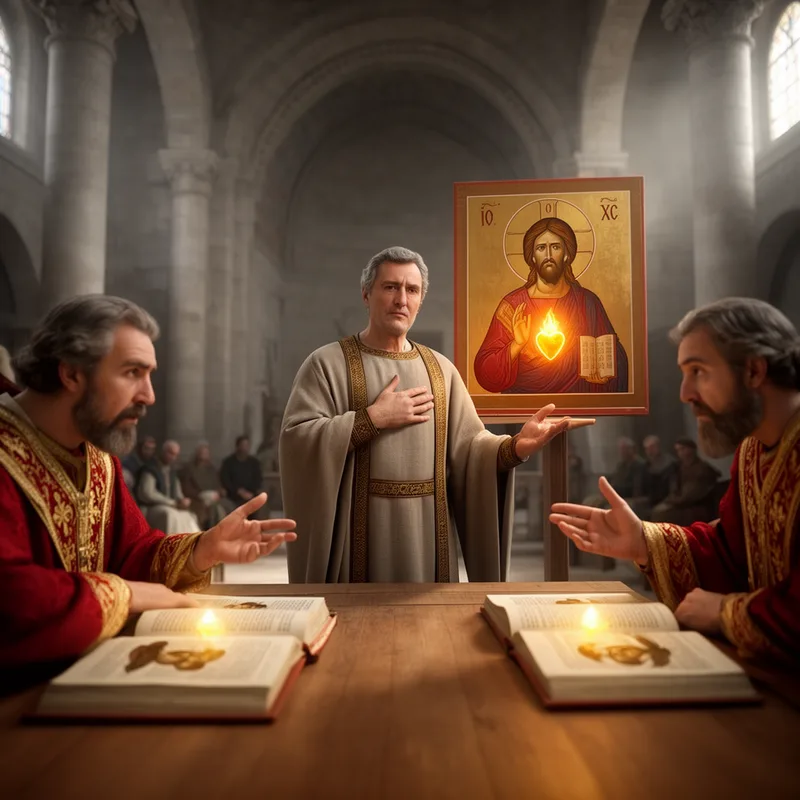
Monothelite


 1
9.9
- noun
- /ˌmɒnəˈθɛlaɪt/
- Formal
- In early Christianity, a monothelite believed that Christ acted with a single divine will.
Examples
-
The first paragraph is, in fact, a rehearsal of the monothelite position, with a view toward understanding it better.
Academic text (1991) -
According to Thomas, the monothelite position is based upon a hierarchy of operations, which implies the passivity of the inferior agent.
Academic text (1991) -
The problem with the monothelites is that they operate from but one view of causality, whereby an effect, even a diversity of effects, can be traced only to one cause or mover.
Academic text (1991) -
The underlying problem for Thomas was set forth by the monothelites and their respondents: how to account for one saving work of the incarnate Word through the two natures of Christ.
Academic text (1991) -
First, he examines the monothelite heresy, which was condemned by the Sixth Ecumenical Council (the Third Council of Constantinople) in 680-681.
Academic text (1991) -
All "monothelites" held one sole hypostatic energy in Christ, or one theandric activity of Christ—one sole hypostatic divine hegemony.
Academic text (1991) -
The teachings of the monothelite sect sparked significant theological debates during the seventh century.
-
The monothelite doctrine emphasizes Christ's unity of will amid his dual nature as both divine and human.
Surface Forms
Morphology
Monothelite = mono + thel + ite
The noun is built from a recognizable mono- prefix, but the core theological element is opaque and not recoverable from ordinary English word knowledge.
Etymology
Monothelite comes from mono- 'one' and thele 'will', so it names a person who believes the 'one will' idea about Christ.