
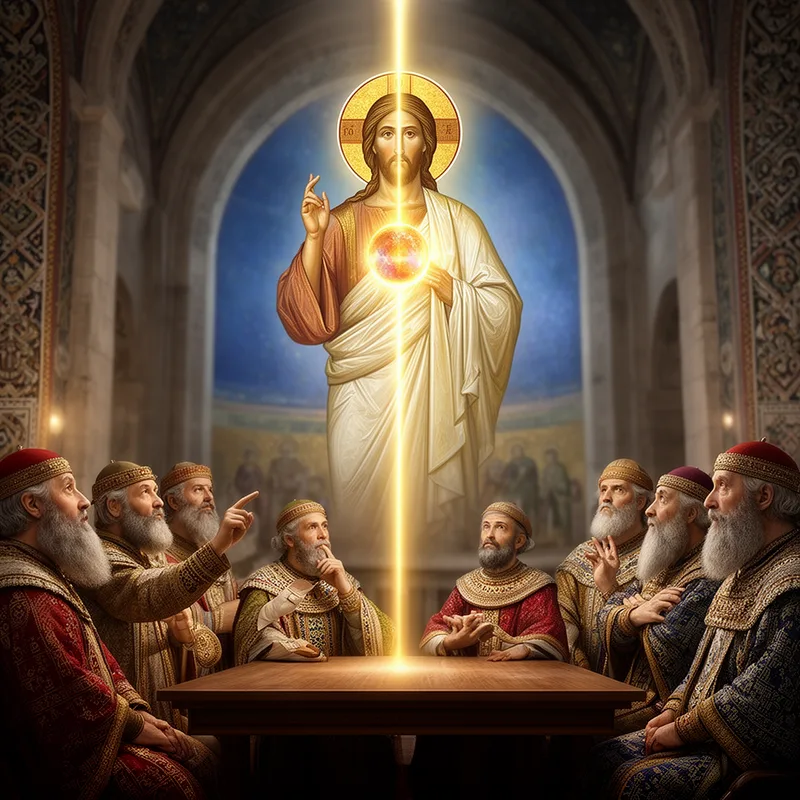
Monothelite


 1
9.9
- adjective
- /ˌmɒnəˈθɛlaɪt/
- Formal
- The Monothelite doctrine asserts that Christ has a single will, which was heavily debated in the early church.
Examples
-
The Monothelite position was declared heretical by the Third Council of Constantinople.
-
Some early church leaders were accused of holding Monothelite beliefs during the seventh century.
-
The Monothelite controversy influenced many theological debates in Byzantine history.
-
The Monothelite doctrine was a significant topic in early Christian debates.
-
Some theologians argue that the Monothelite view simplifies the nature of Christ.
-
During the seventh century, several leaders of the church were labeled as Monothelite for their theological views.
-
The Monothelite perspective played a crucial role in shaping early Christian thought and discussions.
Surface Forms
Morphology
Monothelite = mono + thel + ite
Although mono- clearly means 'one', the remaining theological element is a classical bound form that is not transparent to an average learner.
Etymology
Monothelite comes from mono- 'one' and thele 'will', so it means 'one will'. Think of mono- like in monotone to help you remember, and that is why Monothelite relates to the teaching that Christ has only one will.