

Meuse-Argonne
- proper noun
- /ˈmjuːz-ɑːrˈɡɒn/
- During World War I, he went to France and commanded a brigade at Saint-Mihiel and a division during the Meuse-Argonne campaign.
- Meuse-Argonne offensive
- Meuse-Argonne 1918
- Meuse-Argonne American Cemetery
Examples
-
It is probable that Hubble was taken from Langres, with other officer trainees, to observe the fighting in the Meuse-Argonne offensive, for soon after he returned to the United States following the war, he wrote Frost, "I barely got under fire," and this was the only occasion on which he could have done so.
Academic text (1990) -
The Meuse-Argonne offensive ended with the war itself on Nov. 11, 1918.
-
More than a million U.S. soldiers fought in the 1918 Meuse-Argonne Offensive—the largest and costliest battle in American history.
Synonyms
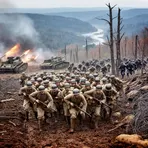
A large American attack in World War I that helped push back German soldiers

A large 1918 American attack led by General Pershing, the biggest US operation in World War I
Surface Forms
Morphology
Etymology
Meuse-Argonne comes from the River Meuse and the Argonne forest in France. The name refers to the major World War I battle in 1918 when American and other Allied soldiers attacked and pushed back German forces in that region.

