
Messalian
- noun
- /ˈmɛsəˌleɪən/
- Specialized
- The Messalian sect was active in the eastern regions of the Roman Empire.
Examples
-
Church authorities condemned the Messalian movement for its unorthodox teachings.
-
Historians debate the true beliefs and practices of the Messalian community.
-
The Messalian beliefs were often misunderstood by mainstream Christians.
-
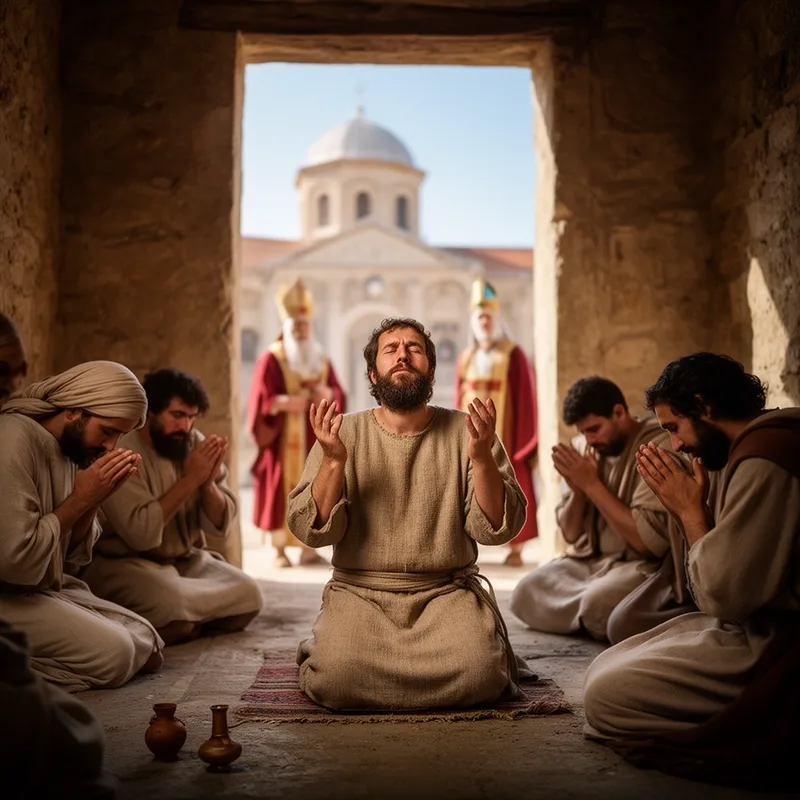
Many Messalians practiced fervent prayer in isolation.
-
The early Christians viewed the Messalians as heretics due to their unusual practices focused on constant prayer.
-
Despite being marginalized, the Messalians retained a dedicated following who believed in their unique spiritual experiences.
-
Many theologians debated the teachings of the Messalians, arguing about their interpretations of prayer and spiritual enlightenment.
Synonyms

 19
8.8
19
8.8

A person who holds beliefs that go against accepted religious teaching

A person who belongs to a small religious group separate from the main church
Surface Forms
Morphology
Messalian = Messali + an
Although formed with the English suffix '-an', the base is a proper name for an obscure sect and not a recognizable English word, so learners cannot infer the sense from components alone.
Etymology
A Messalian comes from the old Syriac mṣallyānā meaning 'one who prays', so it names a member of a group known for constant private prayer and for being called wrong by the official church.