
May 1
 7
1.0
7
1.0

- noun
- Many countries celebrate May 1 with parades and festivals honoring workers and spring.
- season began on May 1
- began on May 1
Examples
-
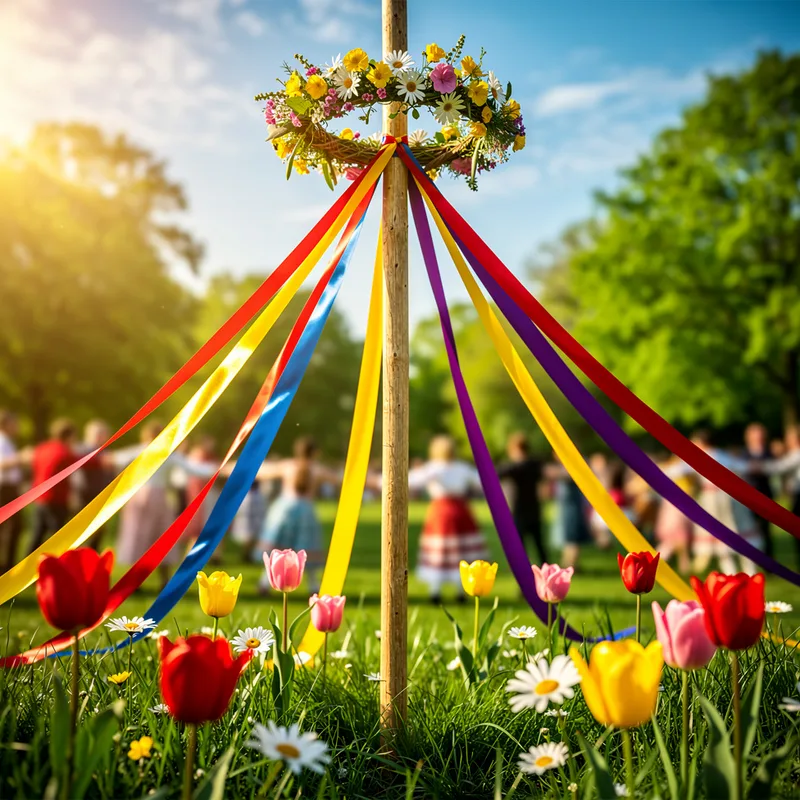
May 1 is recognized in various cultures as a day of festivities welcoming the arrival of spring.
-
We maintained active surveillance through May 1, but no cases occurred after February 23.
Academic text (2012) -
Received on May 1, 2012.
Academic text (2013) -
On May 1, the top eight candidates in each category will be announced.
Academic text (2008) -
Each eligible image must be submitted by May 1 in the format in which it was accepted.
Academic text (2009) -
Data essential to the study was collected between May 1 and May 30, 1988.
Academic text (1990) -
To get a free lunch, you must preregister before May 1, 2009.
Academic text (2009) -
The DDR plan was supposed to have been finalized and announced on May 1.
Academic text (2004) -
The first experimental SWT tube line, between Bogota and New York, went into service on May 1, 2017.
Fiction book (1991) -
The Treaty of Amsterdam, effective May 1, 1999, after Member State ratification, further emphasizes the importance of the environment.
Academic text (2000)
Synonyms
 8
3.3
8
3.3
A festival on May 1 that celebrates the start of summer and workers' rights
 1
3.8
1
3.8
A holiday on 1 May that celebrates spring festivals and workers
Surface Forms
Morphology
The form 'May 1' is directly compositional: combining the month name 'May' with the numeral '1' yields the date 'the first day of May,' which a B1 learner who knows months and numbers can readily interpret. Date expressions of this type are cross-linguistically common, so the specific holiday meaning (May Day) or festivities can be inferred or learned from context once the date is understood.
Etymology
May 1 comes from old spring celebrations when people danced around a maypole and put flowers on doors to welcome the season. In the 1800s workers used the same day for big protests for shorter working hours, so today May 1 can mean either a 'spring festival' or a 'workers' holiday'.