
Martinican


 1
6.8
- noun
- /ˌmɑːrtɪˈniːkən/
- Although they continue to recognize divisions of race and language in everyday discourse, many would not oppose models of identity created and promoted by regional parties such as the PPM, which distinguish Martinican from French but place it within a French national universe where individualism, liberty, and equality feature prominently.
- Martinican society
- Martinican bureaucrats
- Martinican cultural
Examples
-
Despite the efforts of small groups of academics and linguists, for many Martinicans, Creole maintains its subordinated status, associated with specific contexts and social relations.
Academic text (1997) -
The perception of these social categories as non-issues was confirmed in many of my conversations with Martinicans not involved in politics or cultural activism.
Academic text (1997) -
To them, language and race may be issues already resolved in Martinican society.
Academic text (1997) -
Thus, the Martinican individual was differentiated from its French counterpart by culture.
Academic text (1997) -
Why, then, is Creole not considered a symbol of Martinican culture by bureaucrats?
Academic text (1997) -
Surprisingly, regardless of their origin, Martinican and Guadeloupeans were living in perfect harmony.
Fiction book (1997) -
Ethnic and racial labeling is a spontaneous feature of daily interaction between Martinicans.
Academic text (1997) -
Two of these absences—race and language—are particularly conspicuous in everyday Martinican contexts.
Academic text (1997) -
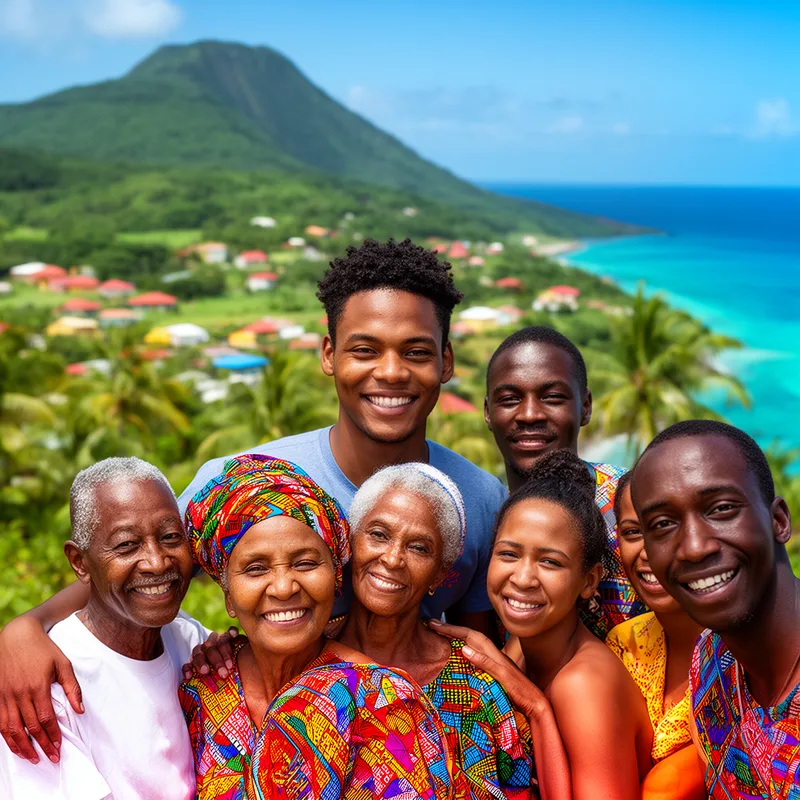
The Martinican people celebrate their unique culture through vibrant festivals every year.
-
Many Martinicans take pride in their heritage, often sharing stories about their ancestry.
Surface Forms
Morphology
Martinican = Martinique (transparent) = Martinique + an
The demonym/noun is formed directly from the place name plus the productive suffix '-an', a regular and recognizable formation.
Etymology
A Martinican is a person from the island of Martinique, which is in the Caribbean and speaks French. The -an ending turns a place name into a person, so a Martinican is 'a person from Martinique'.