
Martinican


 1
7.2
- adjective
- /ˌmɑːrtɪˈniːkən/
- In developing a cultural policy that combats a historically infantilized and effeminized relationship, Martinican cultural bureaucrats were, like their French counterparts, concerned about the individual but did not want to create a model of personhood that replicated the French individual.
- Martinican identity
- Martinican cultural
- Martinican nationalist
Examples
-
Many Martinican artists draw inspiration from the diverse history and natural beauty of their homeland.
-
One could argue that despite this alienating educational system, at the very least, Martinique has gained greater control over its own affairs with "Martinican" personnel employed in regional government affairs. Of the seven directors of cultural affairs bureaus with whom I spoke, all but one were born and raised in Martinique, and many other leadership positions, from economic to educational, were occupied by Martinican citizens as well.
Academic text (1997) -
Indeed, there could be no Martinican individual if this were so.
Academic text (1997) -
But I also argue that in order to understand the Martinican cultural citizen, identifying political alliances is not enough.
Academic text (1997) -
Race cannot be disassociated from questions of hegemony, hierarchy, and colonialism, but Martinican politicians in power in the regional government during the 1980s did not draw attention to such delicate issues unless they were placed in a historical framework as if race were a problem already solved.
Academic text (1997) -
Not only must we recognize the shared social experiences of Martinican and French cultural bureaucrats and politicians in education and training, but we must also recognize the shared historical centrality of the relationship between individualism and culture in French nationalist and Martinican regionalist rhetoric.
Academic text (1997) -
In analyzing the characteristics of the ideal Martinican "cultural citizen," I argue we must recognize the central place of individualism in the French nationalist cultural prototype to expose structural similarities between French and Martinican official cultural identities.
Academic text (1997) -
Official Martinican models of culture and citizenship walked the tightrope between separation and unity, articulating an identity that was distinct and liberated from France without fomenting widespread desire for political and economic independence.
Academic text (1997) -
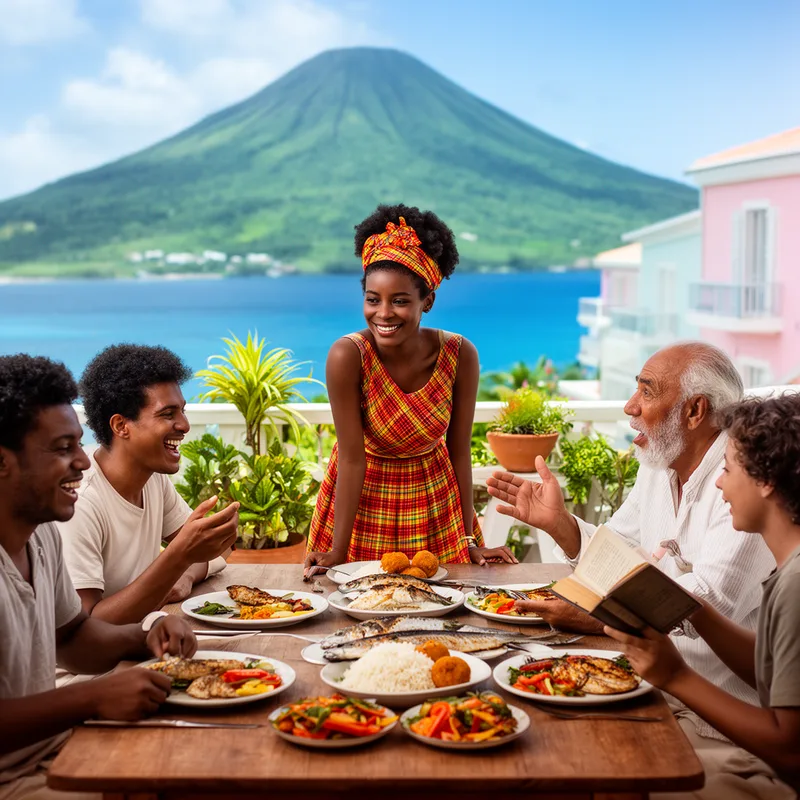
The Martinican festival showcased vibrant music, dance, and local cuisine, reflecting the island's rich culture.
-
Learning the Martinican language is an important step in understanding the local culture and traditions.
Synonyms
 1
7.9
Relating to the Antilles, islands in the Caribbean, or their people and culture
Surface Forms
Morphology
Martinican = Martinique (transparent) = Martinique + an
The adjective is a regular demonym formed by adding the productive suffix '-an' to the place name 'Martinique', which is clear to learners.
Etymology
Martinican comes from the Caribbean island name Martinique, a French-speaking island. The -an ending is a common English way to say 'from' a place, as in American or Italian, so Martinican means 'from Martinique' or 'relating to Martinique'.