
Mardi Gras
 13
3.4
13
3.4

- noun
- /ˈmɑrdi ˈɡrɑ/
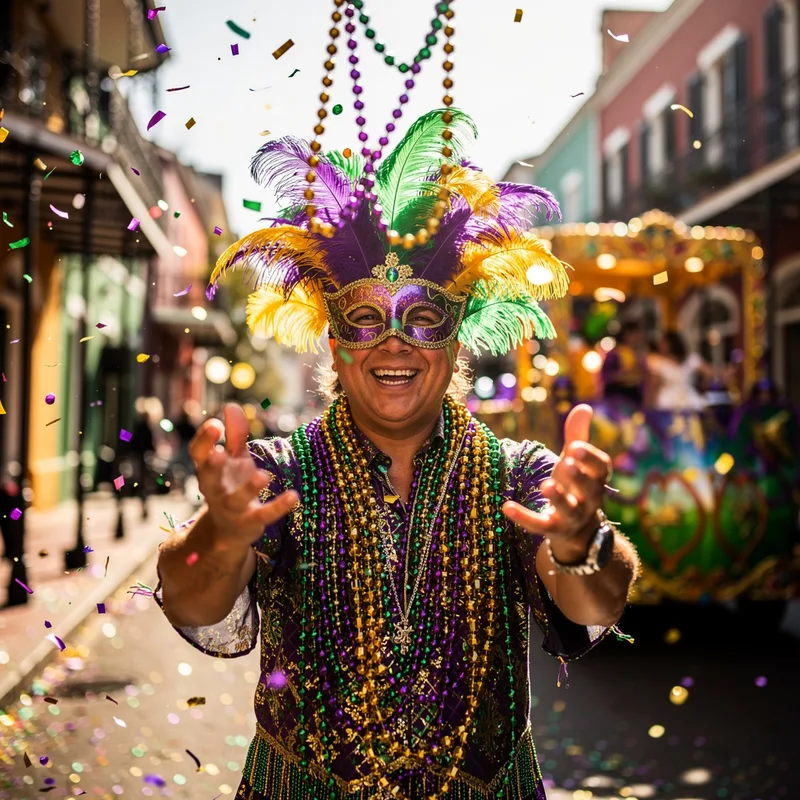
- The streets of New Orleans come alive during Mardi Gras with colorful floats and lively music.
- Mardi Gras parade
- Mardi Gras float
- celebrate Mardi Gras
Loading YouTube…
Watch on YouTubeLike you on the strip, you on Mardi Gras with Bourbon Street, right.
- Like you on the strip, you on Mardi Gras with Bourbon Street, right.
- Stephen Fry Oh my God, I got my own float in the Mardi Gras in Sydney.
- I'm trying to make it down to Mardi Gras to spend some time with my family in Louisiana.
Examples
-
New Orleans is a city of festivities: conventions, Mardi Gras balls, graduation ceremonies, entertainment.
Blog text (5) -
I'm trying to make it down to Mardi Gras to spend some time with my family in Louisiana.
-
It's a long way to Mardi Gras, baby.
-
We were in New Orleans, and it was Mardi Gras.
Fiction book (1991) -
A little early for Mardi Gras, isn't it?
-
It was once at a Mardi Gras ball.
-
You know, uh, Mardi Gras didn't actually start in New Orleans?
-
Local artists are turning Mardi Gras into Yardy Gras with themed outdoor displays inspired by both tradition and pop culture.
-
Every year, millions of people attend Mardi Gras celebrations in New Orleans, filled with parades and vibrant costumes.
-
On Mardi Gras, families gather to enjoy the festivities and indulge in delicious king cake.
Synonyms
 268
1.0
268
1.0
A time when people gather to celebrate with food and fun
 30
2.8
30
2.8
A public festival with parades, music, and dancing in the streets
 3
4.3
3
4.3
A day of feasting and parties before Lent, also called Mardi Gras
Surface Forms
Morphology
Mardi + Gras
Mardi Gras is a borrowed French phrase literally meaning 'Fat Tuesday' (Mardi = Tuesday, Gras = fat), so a learner who knew those constituents could infer it names a special Tuesday associated with feasting. However the specific cultural sense — the last day before Lent and the festival/parade customs — is not fully derivable from the parts and requires cultural or lexical knowledge, so the transparency is partial.
Etymology
Mardi Gras gets its name from the French words Mardi and Gras, meaning 'Tuesday' and 'fat'. People would eat rich, fatty foods on the last day before the religious fast of 'Lent', and that feast turned into the big parades and mask parties in New Orleans we call Mardi Gras today.