
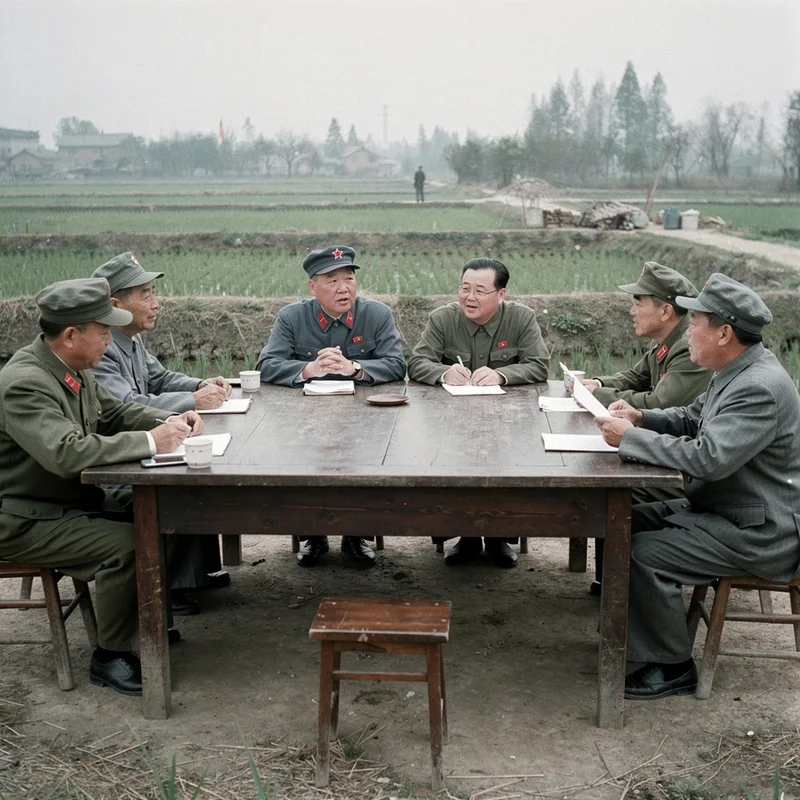
Maoist
 7
8.5

- adjective
- /ˈmaʊɪst/
- The Maoist state often staked its legitimacy on its identification with and support from the peasantry.
- Maoist insurgency
- Maoist era
- Maoist doctrine
Loading YouTube…
Watch on YouTubeMaoist, Maoist China, that was not about religion.
- Maoist, Maoist China, that was not about religion.
- And I thought it's bad enough that we have Brits that are getting swept up in this craze, this demented Maoist craze almost.
- But what what happened was they they attacked the the Chinese mission because Chinese are not Maoist.
Examples
-
Moreover, Pyongyang has no Soviet Union or Maoist China backing it as in the past.
Blog text (3) -
Second, the PKK holds true to Maoist ideology.
Academic text (2007) -
After the split, both Maoist parties are competing to gain the support of ethnic groups.
Blog text (19) -
The end of Maoist isolation led to an unprecedented flood of foreign investors.
Academic text (1997) -
The incredibly inefficient Maoist economy is gone and has been replaced by some of the most competitive firms in the world.
Academic text (2011) -
Beijing suspended its support for Maoist insurgencies throughout the world, and its general approach to diplomacy became nonideological.
Academic text (2008) -
Along with the abolition of danwei patronage, China's post-Mao reformers also abolished the traditional Maoist campaign style of mass political mobilization.
Academic text (2014) -
The government's policies were influenced by Maoist ideology, which emphasizes guerrilla warfare and revolution.
-
In recent years, several political parties have adopted Maoist principles to address social inequalities.
-
Activists protested against the oppressive tactics of leaders who promoted Maoist philosophies in their campaigns.
Synonyms
 397
4.8
Supporting the idea that people share things and work for the community
 4
7.5
Relating to a system where the state owns things and shares them among people
Surface Forms
Morphology
Etymology
Maoist comes from the name Mao, the Chinese leader Mao Zedong, and the ending -ist, which shows 'relating to' or 'supporting' an idea. So when we call a movement or policy Maoist, we mean it follows the ideas of Mao.