

Mamluk


 1
9.9
1
9.9
- noun
- /ˈmæmlʊk/
- The despotic rule of the Mamluk Beys was ended by the French invasion of Egypt in 1798.
- Mamluk sultanate
- Mamluk Egypt
- Mamluk beys
Examples
-
An Islamic oil lamp stand from the Mamluk period (A.D. 1244-1517) was also broken.
Academic text (2009) -
After two hours, the Mamluks call off their attack and retreat.
-
Around 1750, when the Janissaries began to lose their influence to the Mamluk beys, the picture changed.
Academic text (1993) -
As historical records inform us, women in particular excelled in religious scholarship through the late Mamluk period, the 14th and 15th centuries of the common era.
Blog text (19) -
In several cases, these women even became de facto rulers in Iran, Mamluk Egypt, South Asia, and the Ottoman Empire.
Academic text (2007) -
Ibn Hajar's student, al-Sakhawi, dedicated one whole volume of his encyclopaedic biographical work on famous scholars from the Mamluk period to women alone.
Blog text (19) -
Napoleon, however, failed to establish a pro-French government, and his evacuation of Egypt in 1801 left the country in a state of chaos characterized by a continued struggle for political power between rival Mamluk and Ottoman forces.
Academic text (1993) -
This perhaps raises a historical analogy: The Mamluk sultans (1260-1517) tried to get their non-slave sons to succeed them and sometimes managed it, but they were not from the military slave caste and eventually petered out, to be replaced by a proper Mamluk.
Academic text (2010) -
The Mamluks ruled Egypt with a strong military presence during the 13th century.
-
Many historians study the Mamluks to understand their influence on medieval Islamic culture.
Synonyms

A member of a military group who ruled Egypt from the 1200s to the early 1800s
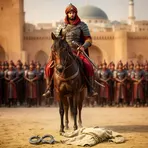
A soldier from old Egypt who began life as a slave and later ruled
Surface Forms
Etymology
Mamluk as a noun comes from the Arabic word mamlūk, meaning 'owned' or 'slave'. The name was used for slave soldiers who rose to power and became rulers in parts of the Middle East, which is why a Mamluk was both a soldier and a ruler.