
Magog
 1
9.9

- proper noun
- Literature
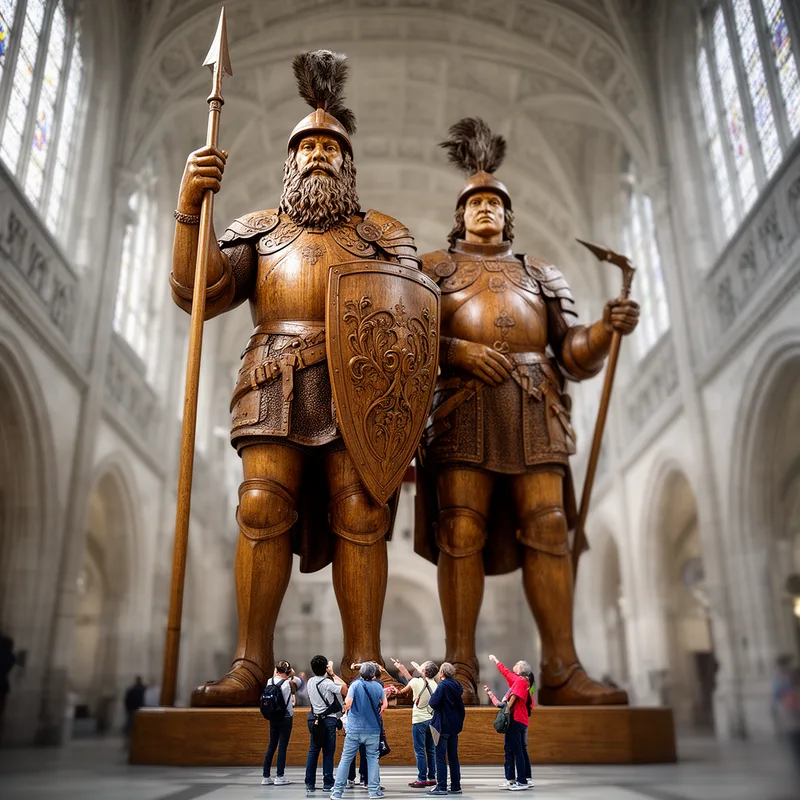
- The statues of Gog and Magog stand at the entrance of the guildhall, symbolizing strength and protection for the city.
- Gog and Magog
Examples
-
Dulcanain built a huge wall of iron, lead and copper which Gog and Magog could not penetrate.
-
It was gigantic, nearly as big as my grandfather's carving of Gog Magog, and a beautiful dark silver color.
Fiction book (2002) -
The scene is set up exactly for the "Gog and Magog" battle.
Blog text (19) -
Looking about anxiously, Magog saw he was facing Death's sister alone.
Fiction book (2002) -
Death's little sister looked levelly at Magog, who had picked up the captain's fallen torch.
Fiction book (2002) -
"Magog did not answer, watching in terror as Persephone flipped idly through the arrows in her quiver.
Fiction book (2002) -
In British folklore, Magog is often depicted as a legendary giant alongside Gog, representing formidable figures guarding the city of London.
-
During the festival, the local parade featured an impressive float of Magog, echoing the stories told about these mythical giants.
Synonyms
 30
2.3
A very large imaginary person in stories
Compounds

- Literature
1
9.9
Two enemies in the Bible who fight God's people at the end of the world
Surface Forms
Etymology
Magog in British legend takes its name from the Bible's Magog, which was the name of a foreign people, and over time that old name became a giant or statue who stands as a city guardian.