
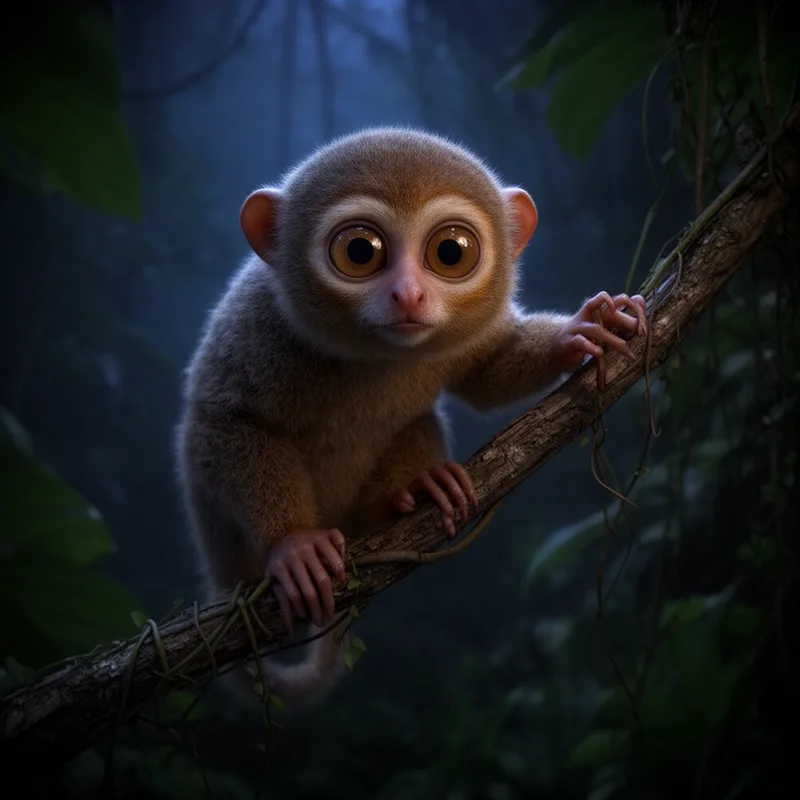
Lorisidae
- noun
- /ˌlɔːrɪˈsiːdeɪ/
- Specialized
- Unlike monkeys, members of the Lorisidae family lack tails and move slowly among the branches.
Examples
-
Did you know that Lorisidae are primarily nocturnal?
-
The Lorisidae are recognized by their round heads and large forward-facing eyes.
-
Conservationists are concerned about the declining numbers of Lorisidae throughout Southeast Asia.
-
The Lorisidae family includes several species of slow-moving primates.
-
Conservationists are concerned about the declining numbers of Lorisidae throughout Southeast Asia.
-
The Lorisidae are recognized by their round heads and large forward-facing eyes.
-
Unlike monkeys, members of the Lorisidae family lack tails and move slowly among the branches.
Synonyms
Small slow animals related to monkeys that live in trees at night in tropical Asia
Compounds
- Specialized
Small slow animals related to monkeys that live in trees at night in tropical Asia
Surface Forms
Morphology
Etymology
Lorisidae comes from the animal name Loris and the scientific ending -idae, which means 'family'. The name Loris likely came from a Dutch word meaning 'clown' or 'simple person' because of the animal's round face and big eyes, so Lorisidae is the family name for these slow, often tailless, primates that are active at night.

