

Lophophora williamsii
- noun
- /ˌloʊfəˈfoʊrə wɪˈljæmziˌi/
- NSFW
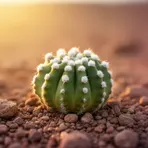
- Lophophora williamsii is a small, globe-shaped cactus commonly found in Mexico and the southwestern United States.
Examples
-
Growing Lophophora williamsii is regulated in many countries due to its use in producing mescal buttons.
-
Botanists have studied Lophophora williamsii to understand its ecological role in desert environments.
-
Lophophora williamsii is well known for its psychoactive properties, particularly in indigenous ceremonies.
-
The Lophophora williamsii is often used in traditional medicine.
-
Many people are interested in the Lophophora williamsii for its psychoactive properties.
-
In some indigenous cultures, Lophophora williamsii is revered for its use in spiritual ceremonies.
-
The smooth texture and unique shape of Lophophora williamsii make it stand out among other cacti.
Synonyms
 12
9.9
12
9.9

A small round cactus without spines that can cause visions
 1
9.9
1
9.9
A small spineless round cactus from Mexico and the southwestern United States whose dried tops can cause hallucinations
Surface Forms
Morphology
Lophophora + williamsii
This is a Latin binomial (genus + species) used as a scientific name rather than a compositional English phrase. The species epithet 'williamsii' is a proper name with no descriptive meaning in ordinary English, so even if a learner knows 'Lophophora' as a type of cactus the full referent (the specific peyote cactus species) requires domain knowledge and is not derivable from the parts.
Etymology
Lophophora williamsii comes from old Greek words: Lophophora means 'crest' or 'tuft' and points to the small round crown on the cactus, and williamsii honors a collector named Williams, so the name helps you picture the plant and remember it is named after a person.