
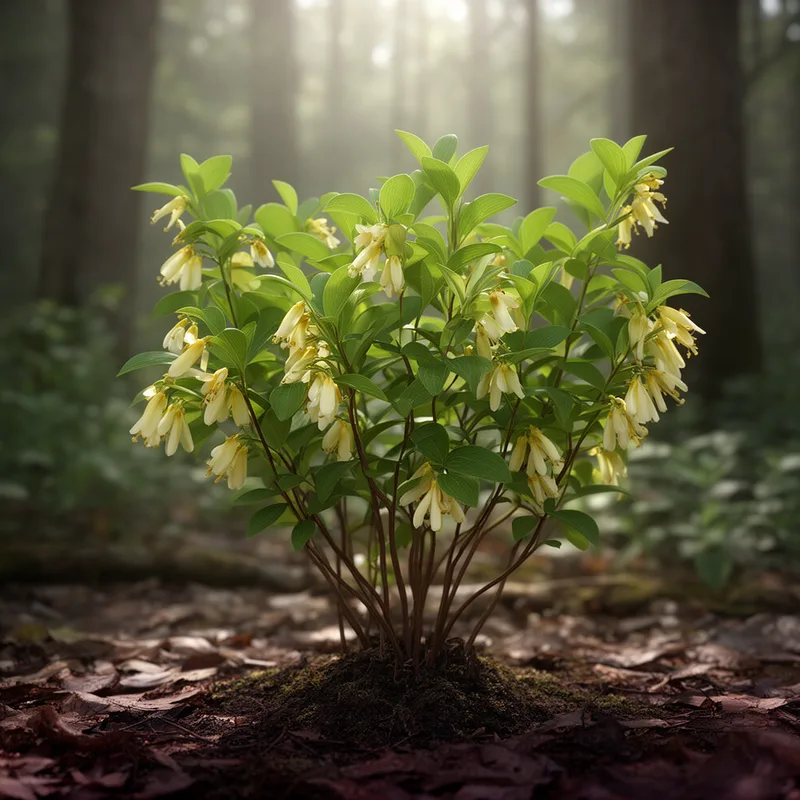
Lonicera canadensis
- noun
- Specialized
- Botanists observed the distinctive yellow-white flowers of Lonicera canadensis in early spring.
Examples
-
The garden featured several Lonicera canadensis shrubs in bloom.
-
Lonicera canadensis prefers moist, shaded woodlands for optimal growth.
-
Look at how the Lonicera canadensis flowers attract bees!
-
I saw a beautiful Lonicera canadensis blooming in the garden.
-
Lonicera canadensis is commonly found in the woodlands of North America and thrives in moist areas.
-
In spring, the lovely yellow-white flowers of Lonicera canadensis attract many pollinators.
-
You can easily identify Lonicera canadensis by its fragrant flowers and bushy growth habit.
Synonyms

A North American bush with pale yellow flowers and berries eaten by birds
Surface Forms
Morphology
This is a standard Linnaean binomial combining the genus name 'Lonicera' with the species epithet 'canadensis' (indicating origin from Canada). Given those constituent meanings a B1 learner who knows both elements can infer it denotes a Lonicera species native to Canada (i.e., the American/Canadian honeysuckle), so the name is compositionally transparent despite being technical.
Etymology
Lonicera canadensis is a scientific name that gives a simple picture: Lonicera honors the botanist Adam Lonicer, and canadensis is a Latin word meaning 'from Canada'. So the name points to a Lonicera shrub that comes from North America and helps you remember it is a small shrub with pale yellow flowers.

