

Lithops
- noun
- /ˈlɪθɒps/
- Specialized
- The Lithops in my greenhouse have just started to bloom with tiny yellow flowers.
Loading YouTube…
Watch on YouTubeOh, oh, it's been a while since I've had these Lithops.
- Oh, oh, it's been a while since I've had these Lithops.
Examples
-
Researchers study Lithops to understand how plants adapt to extreme drought.
-
Many plant enthusiasts collect Lithops because of their unusual appearance and resilience.
-
Look at my Lithops!
-
I have a Lithops.
-
Many plant enthusiasts collect Lithops because of their unusual appearance and resilience.
-
Researchers study Lithops to understand how these plants survive in arid environments.
-
The Lithops in my greenhouse have just started to bloom, showcasing their unique yellow flowers.
Synonyms

A small plant with thick leaves that looks like a stone and has yellow or white flowers
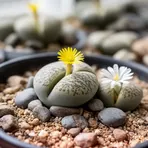
A small plant with thick leaves that looks like a stone and has yellow or white flowers

A small plant with thick leaves that look like stones and a single yellow or white flower

A small plant with thick leaves that look like stones and one yellow or white flower

A small plant with thick leaves that look like a stone
Surface Forms
Etymology
Lithops comes from the Greek words lithos 'stone' and ops 'face' or 'appearance'. So these small succulents are often called 'living stones' because they look like little stones and hide to survive in dry places.

