
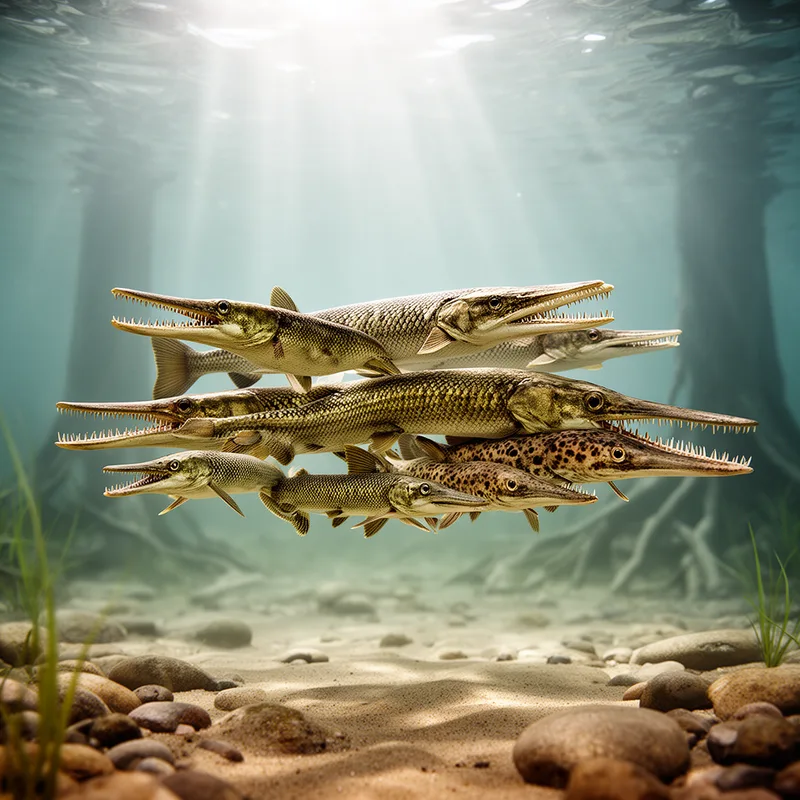
Lepisosteidae
- noun
- /ˌlɛpɪˈsɔːtɪˌdeɪ/
- Specialized
- Several species within the Lepisosteidae family inhabit rivers and lakes in North America.
Examples
-
The Lepisosteidae are known for their elongated bodies and sharp teeth.
-
Did you know that Lepisosteidae are often called gars?
-
Fossil records show that Lepisosteidae have existed since the Cretaceous period.
-
The Lepisosteidae family includes several species of ancient fish.
-
Fossil records show that Lepisosteidae have existed for millions of years in freshwater environments.
-
Several species within the Lepisosteidae family are commonly found in the lakes and rivers of North America.
-
The Lepisosteidae are characterized by their long, sleek bodies and sharp, pointed teeth.
Synonyms
A group of long, toothy freshwater fish called gars
Compounds
Surface Forms
Morphology
Lepisosteidae = Lepisosteus (opaque) = lepisosteus + idae
The word is a scientific family name formed by adding the technical taxonomic suffix '-idae' to the genus name, a formation that is specialized and not transparent to average learners.
Etymology
The word Lepisosteidae comes from Greek parts lepis 'scale' and osteon 'bone', so you can imagine a fish covered in hard, bony scales. The ending -idae marks an animal family, which is why Lepisosteidae is the family name for the gars.

