
Lepiota rubrotincta
- noun
- Specialized
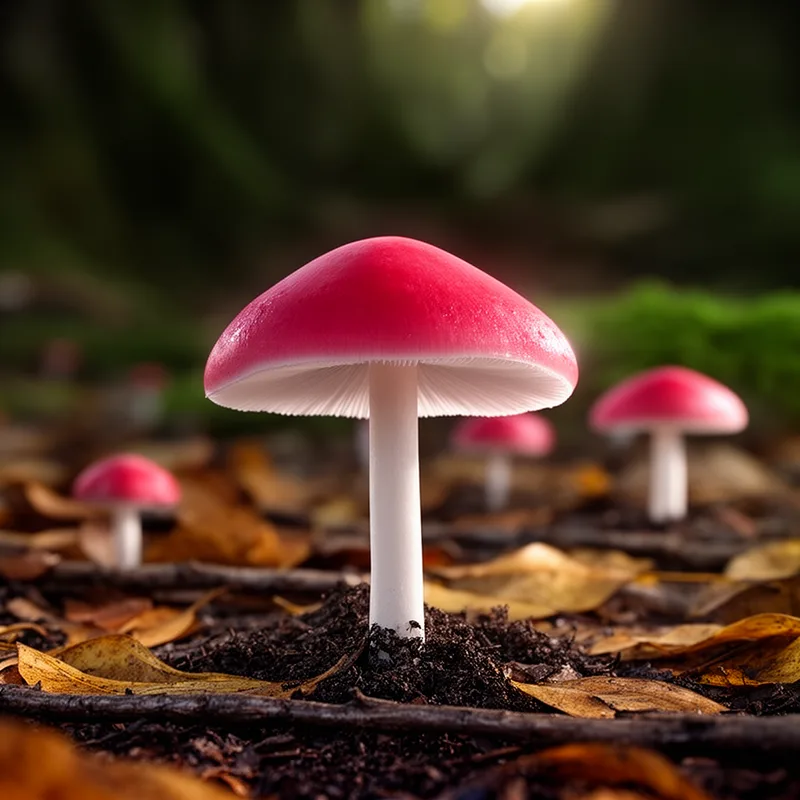
- The forest floor was dotted with Lepiota rubrotincta, their red caps standing out among the leaves.
Examples
-
Some mushroom guides caution against eating Lepiota rubrotincta due to its resemblance to toxic species.
-
Botanists gathered samples of Lepiota rubrotincta for further study in the laboratory.
-
The Lepiota rubrotincta is often found in grassy areas.
-
Have you ever seen a Lepiota rubrotincta in the wild?
-
Some mushroom guides caution against eating Lepiota rubrotincta due to its resemblance to toxic species.
-
Botanists gathered samples of Lepiota rubrotincta for further study in the laboratory.
-
The forest floor was dotted with Lepiota rubrotincta, their red caps standing out among the leaves.
Surface Forms
Morphology
lepiota + rubrotincta
The generic element 'Lepiota' transparently signals a fungus (a scaly-capped agaric), but the epithet 'rubrotincta' is not a standard English word and is absent from dictionaries. Its Latin components (rubro- = red, tincta = tinted) make the name partially inferable as a red‑tinted Lepiota for learners with botanical or Latin knowledge, but an average B1 learner who only knows basic English vocabulary would not reliably derive that, so the overall transparency is partial.
Etymology
Lepiota rubrotincta comes from older word parts that describe the mushroom. The part Lepiota points to its 'scaly cap' and the part rubrotincta means 'red-tinged', so the name gives a simple picture of a small mushroom with a red cap and white stalk.

