
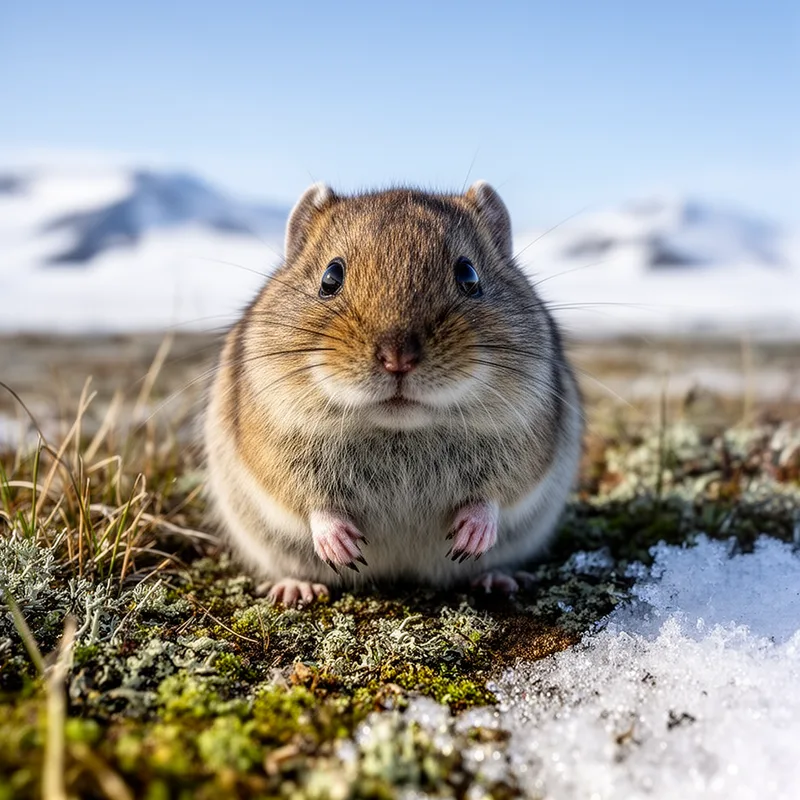
Lemmus trimucronatus
- noun
- Specialized
- Researchers observed the burrowing habits of Lemmus trimucronatus during the Arctic summer.
Examples
-
The Lemmus trimucronatus is well adapted to the harsh climate of northern Alaska.
-
Populations of Lemmus trimucronatus fluctuate greatly depending on predation and food availability.
-
The Lemmus trimucronatus is a unique species of lemming.
-
Researchers studied the Lemmus trimucronatus in Alaska.
-
In the cold tundra of Alaska, the Lemmus trimucronatus builds intricate burrows to find shelter from predators.
-
The Lemmus trimucronatus plays an important role in the Arctic ecosystem as a primary food source for many predators.
-
During the summer months, the Lemmus trimucronatus can be seen foraging for food in the grassy meadows of northwestern Canada.
Synonyms
A small burrowing animal like a mouse with brown fur and a short tail from northwestern Canada and Alaska
Surface Forms
Morphology
Lemmus + trimucronatus
This is a Latin binomial (scientific) name: although 'Lemmus' refers to lemmings, 'trimucronatus' is a Latin epithet not a normal English word and does not transparently convey 'a species of lemming' to an average B1 learner. The expression functions as an arbitrary taxonomic label rather than a compositional English phrase, so its meaning is opaque without specialist or etymological knowledge.
Etymology
Lemmus trimucronatus The name Lemmus trimucronatus comes from old scientific words: Lemmus means 'a lemming' and trimucronatus may mean 'three-pointed'. That 'three-pointed' idea probably points to a small sharp part, like a tooth or the tip of the tail, so the name helps people tell this northwestern lemming apart from other lemmings.

