
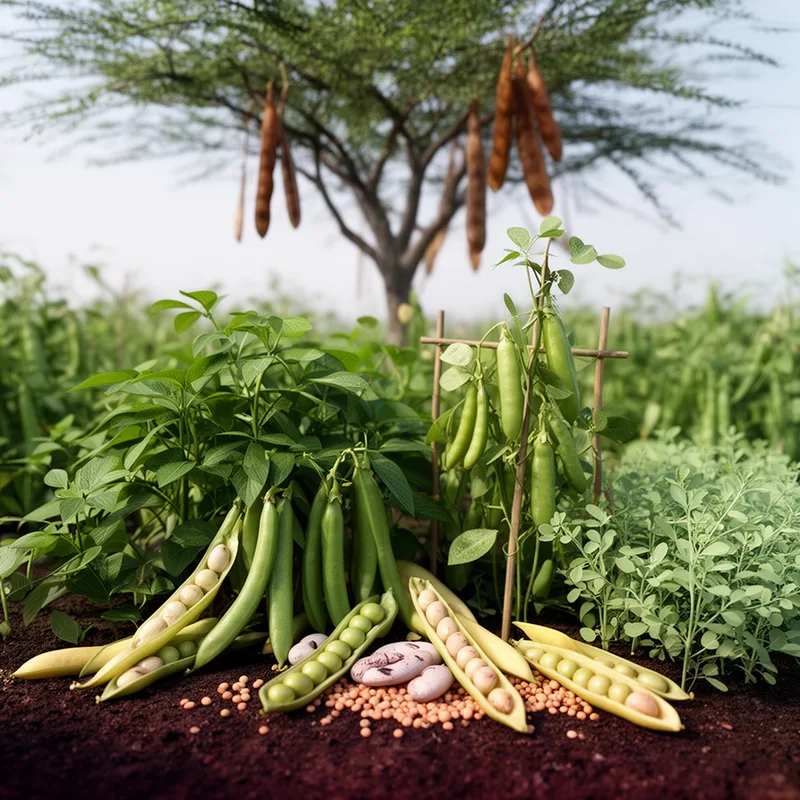
Leguminosae
- noun
- /lɛˌɡjuːmɪˈnoʊzi/
- Specialized
- Many common vegetables, such as beans and peas, belong to the family Leguminosae.
Examples
-
Many species in the Leguminosae can fix nitrogen in the soil, benefiting agriculture.
-
Agronomists study the Leguminosae family due to their ability to improve soil fertility.
-
Acacia trees are a well-known member of the Leguminosae found in Australia.
-
The Leguminosae family includes important crops like beans, peas, and lentils.
-
The Leguminosae family includes many important crops.
-
Many Leguminosae plants are rich in protein.
-
The Leguminosae family includes important crops that provide protein-rich food sources.
Synonyms



 1
8.9
1
8.9
A family of flowering plants like peas and beans that make seed pods
 1
3.6
1
3.6
A group of plants like peas and beans that grow in pods
 1
4.1
1
4.1
A group of plants that grow bean pods like peas and beans
Surface Forms
Etymology
Leguminosae comes from the Latin legumen, which means 'legume' or 'pod' and is the same root as the English word legume. So it names the plant family whose members make pods full of seeds, like beans, peas, and lentils.