
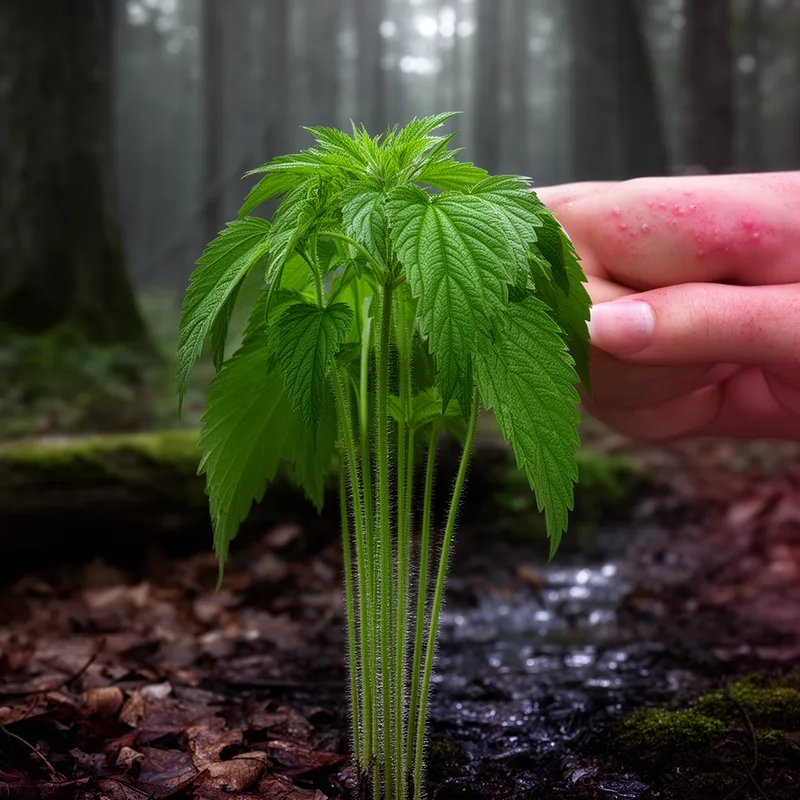
Laportea canadensis
- noun
- /ləˈpɔrtiə kəˌnædɛnˈsɪs/
- Specialized
- The stinging hairs of Laportea canadensis can cause skin irritation when touched.
Examples
-
Some indigenous peoples used fibers from Laportea canadensis to make strong fishing nets and textiles.
-
Laportea canadensis grows abundantly in moist, shady forests throughout eastern North America.
-
The Laportea canadensis thrives in rich, moist woods.
-
Have you ever seen Laportea canadensis in the forest?
-
The stinging hairs of Laportea canadensis can cause skin irritation when touched.
-
Some indigenous peoples used fibers from Laportea canadensis to make strong fishing nets and textiles.
-
Laportea canadensis grows abundantly in moist, shady forests throughout eastern North America.
Synonyms
 9
5.5
9
5.5

A plant with hairs that sting and make your skin hurt when you touch it
A woodland plant with stinging hairs that can hurt your skin
How Irritating

 1
4.6
1
4.6

- Specialized
Surface Forms
Morphology
The name is transparently compositional: it combines the genus 'Laportea' (a plant genus) with the specific epithet 'canadensis' (indicating origin from Canada), so a learner who knows those constituent meanings can infer it denotes a Laportea species from Canada. Scientific binomial naming is a regular, cross-linguistic pattern, so despite being botanical jargon, the overall meaning is directly derivable from the parts.
Etymology
Laportea canadensis is a scientific name: Laportea is named after a French plant scientist and canadensis means 'from Canada'. The name fits the plant you can picture in moist, shady woods — a wood nettle with stinging hairs that people used for strong fibers, so it is called the 'Canadian wood nettle'.