
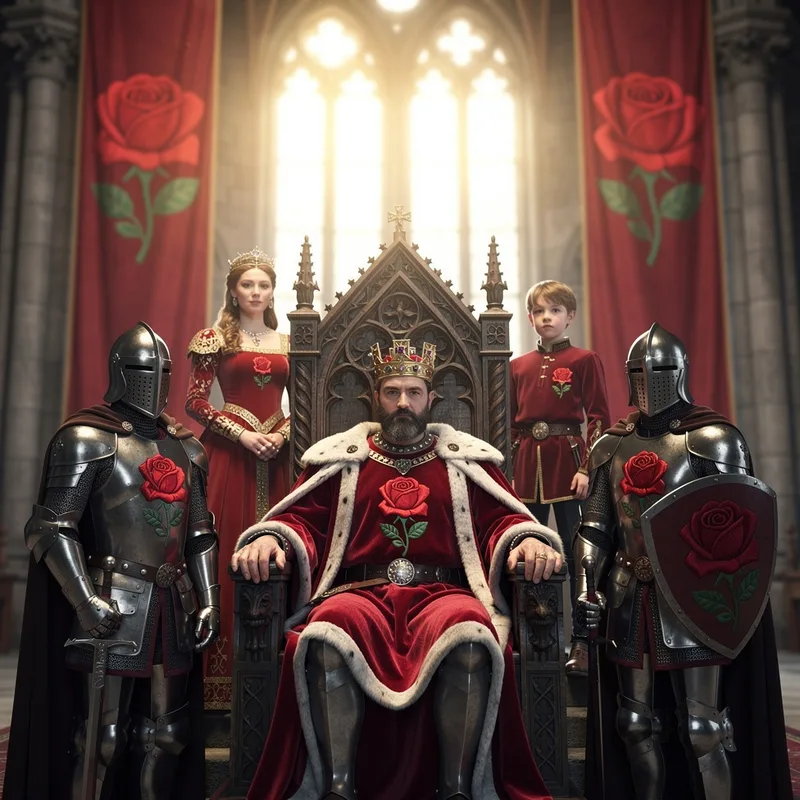
Lancaster
 5
8.7
5
8.7

- proper noun
- /ˈlæŋkəstər/
- The House of Lancaster, led by King Henry VI, was routed by the forces of the House of York, which soon assumed control of England under King Edward IV.
- Lancaster House
- Lancaster and York
- Duchy of Lancaster
Examples
-
The Battle of Towton pitted the House of Lancaster under King Henry VI against Edward of York, who would become King Edward IV.
Academic text (2011) -
The house of Lancaster had on occasion used a red rose symbol and Henry very cleverly actually, noted these two symbols and created the Tudor rose, which is a red and white rose and which symbolized the union of the House of Lancaster and the House of York.
-
You have the Lancaster cousins against the York cousins.
-
Now Lionel is off in Ireland, but John of Gaunt, his uncle, head of the House of Lancaster, is helping him rule the country.
-
Set in 15th-century England during the historical dynastic war between rival houses Lancaster and York—dubbed the War of the Roses—players will pick a side and lay waste to their enemies on the battlefield.
Blog text (11) -
The emblem of the House of Lancaster was a striking red rose, symbolizing their royal heritage.
-
During the War of the Roses, the followers of the House of Lancaster clashed with those of the House of York.
-
The royal lineage of the House of Lancaster includes notable figures like Henry IV and Henry VI.
Synonyms


 1
8.7
1
8.7
A part of the English royal family that ruled 1399 to 1461 and used a red rose as its symbol

An English royal family that ruled from 1399 to 1461 and used a red rose as their symbol
Compounds
1
8.7
A part of the English royal family that ruled 1399 to 1461 and used a red rose as its symbol
Surface Forms
Etymology
Lancaster (the royal house) is named after the city of Lancaster, because the family who led it came from that place and used a red rose as their badge. So the 'House of Lancaster' simply means the ruling family from the town of Lancaster.