
Jomon


 1
9.9
- proper noun
- /ˈdʒoʊmɒn/
- In Japan, the Jomon, as they are called, were replaced about 3,000 years ago by ancestors of modern Japanese who brought rice cultivation to the islands.
- Jomon and Yayoi
Examples
-
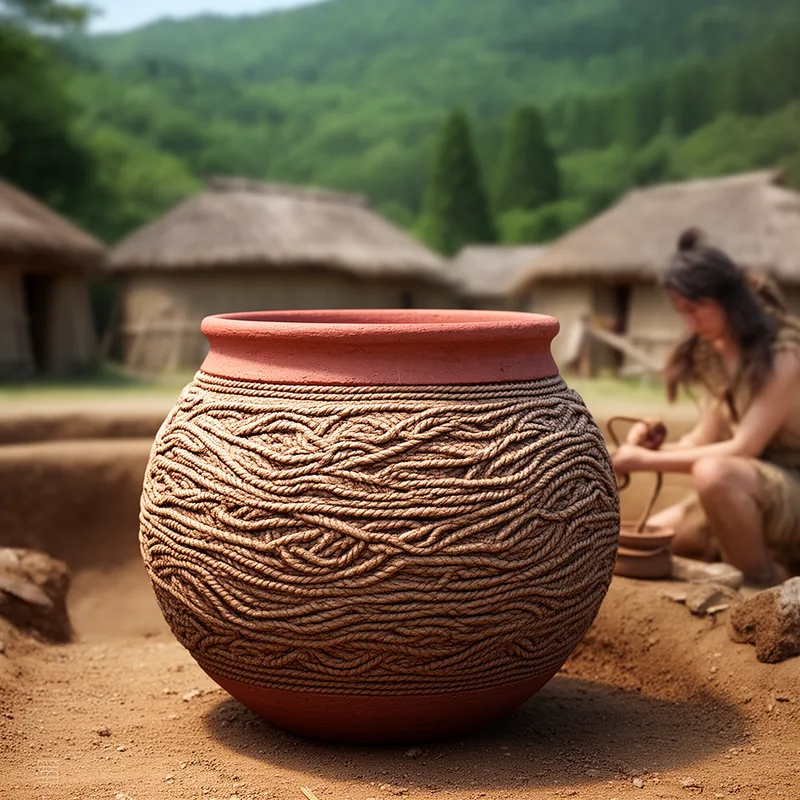
The artifacts discovered at the site reveal much about the daily life of the Jomon, known for their advanced pottery techniques.
-
During the Jomon period, the people primarily relied on fishing and gathering wild plants for their sustenance.
-
The Jomon lived by hunting and gathering for at least 12,000 years before the Yayoi, he tells me.
Academic text (2008) -
Furthermore, DNA research has shown traces of both Jomon and Yayoi ancestry in the modern Japanese.
Academic text (2008) -
Moving the date back has forced archaeologists to reinterpret how the shift from Jomon to Yayoi took place.
Academic text (2008) -
If you're walking along the street in Nagaoka and you look down, you will see a prehistoric Jomon pot.
-
The advantages of agriculture over hunting and gathering were the adaptive edge that accounts for the eventual disappearance of the aboriginal Jomon.
Academic text (2000) -
The dawn of the agriculture-intensive Yayoi period marked the end of the Jomon, a culture of hunter-gatherers who occupied the islands beginning around 13,000 B.C.
Academic text (2008) -
Japanese often categorized their faces into two groups, namely Jomon-jin (Original Japanese) and Yayoi-jin (or Torai-jin, people from the continent).
Blog text (15) -
Researchers found that the Jomon created intricate pottery designs that have fascinated historians for centuries.
Surface Forms
Etymology
Jomon comes from the Japanese words jō ('rope') and mon ('pattern'), because the rope-marked pottery is the main sign of that culture. That's why the whole culture and time are known as the Jomon period.