
Jomon


 1
9.8
- adjective
- /ˈdʒoʊmɒn/
- Specialized
- The hunting-and-gathering Jomon lifestyle was no match for the productivity of rice farming.
Examples
-
PHOTO (COLOR): Meggers sees striking similarities between Jomon ceramics, left column, and those found in Valdivia, right.
Academic text (2003) -
Eventually dated to 4000 B.C., they bore a remarkable resemblance to those of Japan's Jomon culture for the same period.
Academic text (2003) -
A wholesale slaughter would have left few traces of the Jomon physique in the modern population.
Academic text (2008) -
One possible explanation is a violent conquest by the new arrivals, who would have wiped out or subjugated their Jomon competitors.
Academic text (2008) -
Jomon skeletal remains are distinctive as well: shorter, thicker-boned, and with different facial features than later skeletons.
Academic text (2008) -
An earlier date for the arrival of the Yayoi would confirm that the transition from the Jomon hunting-and-gathering culture to sedentary rice cultivation was gradual and not the result of a sudden conquest.
Academic text (2008) -
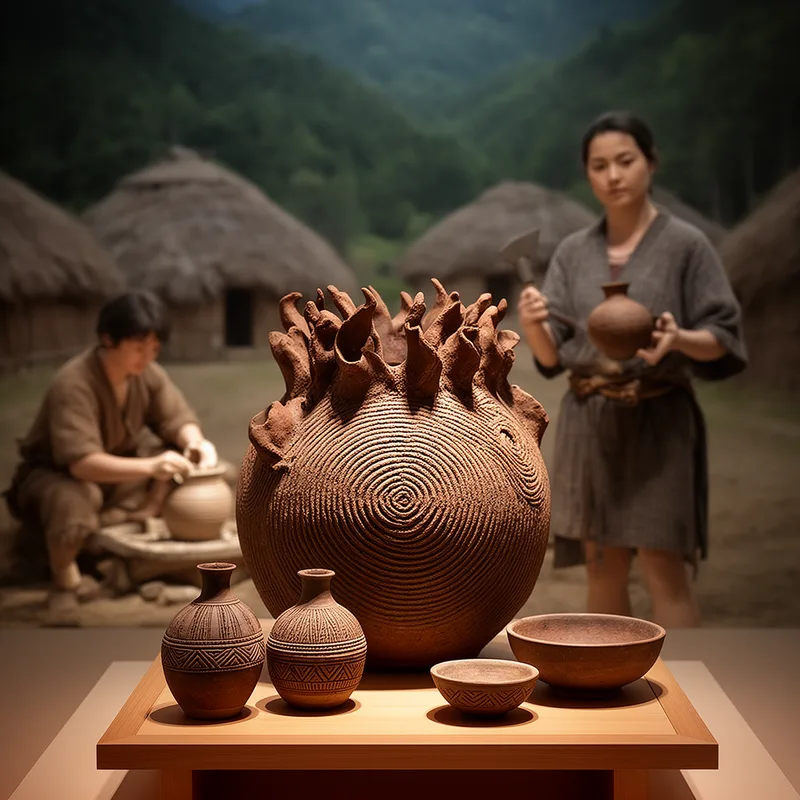
The pottery created by the Jomon culture is characterized by intricate designs and cord markings.
-
Archaeologists have discovered numerous artifacts from the Jomon period, revealing insights into prehistoric Japanese life.
-
The Jomon people are well-known for their innovations in clay craftsmanship and their unique approach to hunting and foraging.
Surface Forms
Etymology
Jomon comes from the Japanese words jō ('rope') and mon ('pattern'), because their pottery was often marked with rope designs. So Jomon as an adjective describes things that come from that ancient pottery style.