
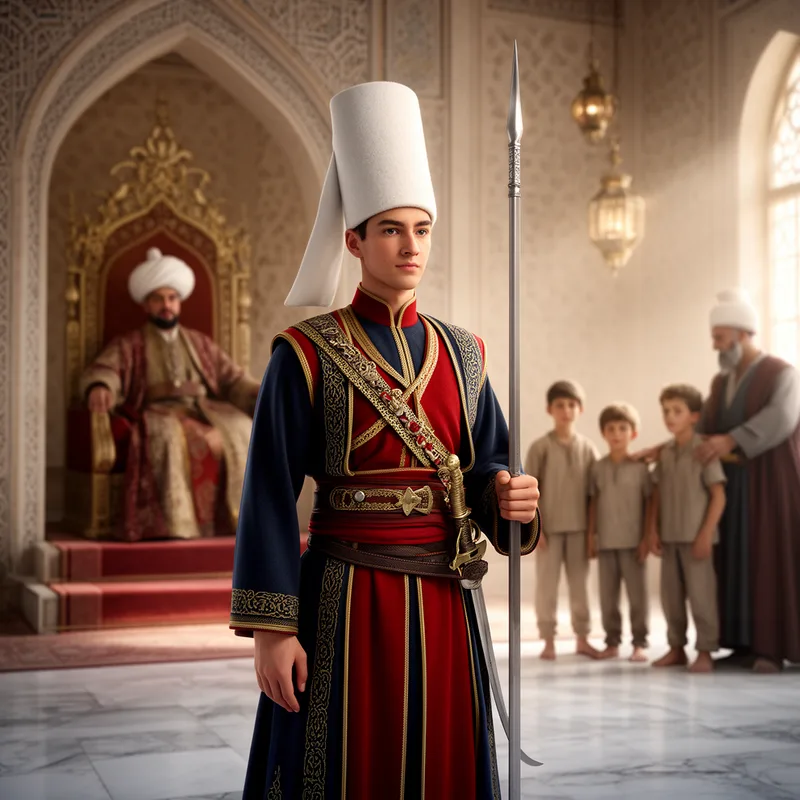
Janissary
- noun
- /ˈdʒænɪˌsɛri/
- Archaic
- To survive, Sultan Sillim the Third sought to curb the Janissary's influence and modernize the empire with widespread reforms.
Loading YouTube…
Watch on YouTubeThey didn't want their sons to have to go become Janissaries.
- They didn't want their sons to have to go become Janissaries.
Examples
-
Bayazid had a strong centre with Archers in front, Janissaries in the second line and Sipahi cavalry in reserve.
-
According to these tales, Mehmet Beg perished at the hands of the janissaries as the remaining Turks broke through the encirclement and fled west.
Blog text (32) -
A fierce melee ensued, with elite Janissaries dueling disciplined Knights.
-
The Sultan's elite infantry, known as janissaries, were feared for their discipline and combat skills.
-
Historically, janissaries served as the backbone of the Ottoman military, often leading key battles.
-
Many stories recount the bravery of the janissaries during sieges, earning them a fearsome reputation throughout Europe.
Compounds

- Specialized
A group of special soldiers in the Ottoman Empire who served the ruler and had great power
Surface Forms
Etymology
Janissary comes from the Turkish words yeni 'new' and çeri 'soldier', so it originally meant 'new soldier'. These young men were chosen and trained to be a special troop for the Ottoman ruler, which is why Janissary now means a member of that famous Ottoman infantry.

