

Ixodes scapularis
- noun
- Specialized
- The lifecycle of Ixodes scapularis involves several hosts, including small mammals and deer.
Examples
-
Researchers found that the Ixodes scapularis tick was responsible for most Lyme disease cases in the region.
-
Preventing bites from Ixodes scapularis is an important part of outdoor safety in the northeastern United States.
-
The Ixodes scapularis can transmit Lyme disease to humans.
-
Have you ever encountered an Ixodes scapularis in the woods?
-
Preventing bites from Ixodes scapularis is essential to avoid Lyme disease when spending time outdoors.
-
Researchers found that the Ixodes scapularis tick is the primary vector of Lyme disease in eastern North America.
-
The lifecycle of Ixodes scapularis includes various hosts such as deer and small mammals, which are crucial for its reproduction.
Synonyms

 1
6.0
1
6.0

A small blood-sucking bug that bites animals and people and can carry Lyme disease
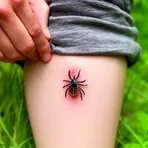
A small tick found in eastern North America that bites people and can give them Lyme disease
Surface Forms
Morphology
Ixodes + scapularis
This item is a Latin binomial (taxonomic) name rather than a compositional English phrase, so its specific meaning (the black‑legged/deer tick that transmits Lyme disease) cannot be derived from ordinary English knowledge of the parts. Even if a learner recognised 'Ixodes' as a tick genus, the species epithet 'scapularis' is technical or unknown and the binomial denotes a scientific identity rather than a literal, predictable combination.
Etymology
Ixodes scapularis may come from old Greek and Latin words: Ixodes from a Greek word meaning 'sticky' and scapularis from Latin meaning 'of the shoulder'. So think of a small sticky tick that sticks to the shoulder of a deer or person, and that image helps you remember this is the 'deer tick' that bites and spreads Lyme disease.