
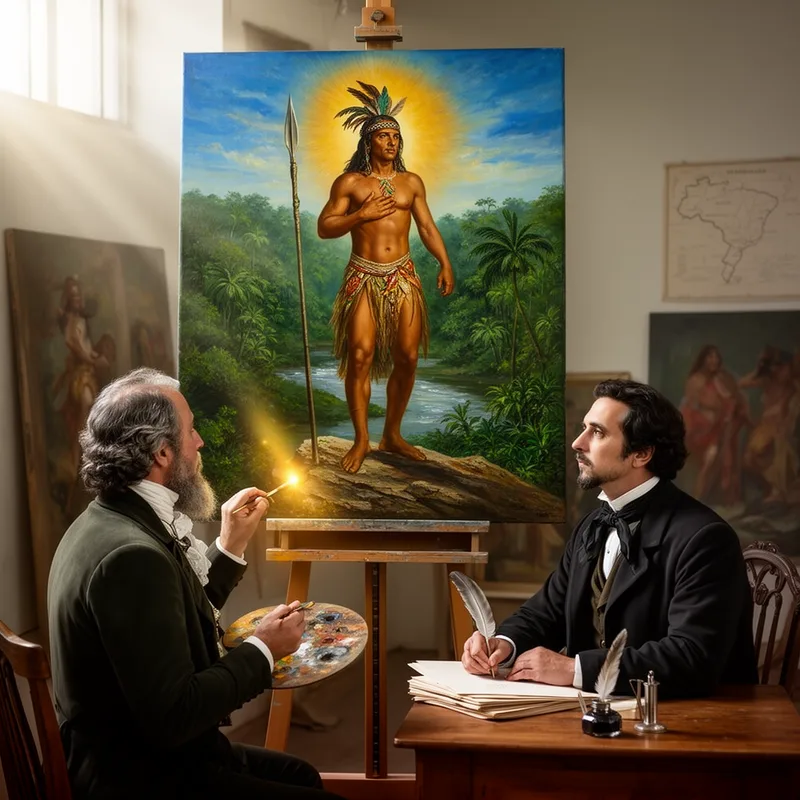
Indianism


 1
9.9
- noun
- /ˈɪndiənˌɪzəm/
- Archaic
- Through Indianism, artists depicted indigenous characters as heroes, reinforcing their importance in Brazil's collective history.
Loading YouTube…
Watch on YouTubeThat he deny that in doing so he denied the aspirations of Indianism.
- That he deny that in doing so he denied the aspirations of Indianism.
Examples
-
Many writers during the late 19th century embraced Indianism as a way to forge a unique Brazilian cultural narrative.
-
I am not aware that "Indianism" appears elsewhere in the literature of the time:
Academic text (1991) -
The warrant's gonna specify the murder of white citizens, horse thievery, and hostile Indianism.
-
The Southeast Syndrome, this new resurgence of Indian identity or "pan-Indianism" among descendants and others in the Southeast who constellate through recruitment, has had at least two negative consequences.
Academic text (1990) -
The overlapping descriptors of Americanism, Anti-Hispanism, Indianism, and the concept of independence as a foundational narrative are three prominent trends in Latin American nationalist writing in the post-independence period.
Academic text (2001) -
The literary movement known as Indianism played a crucial role in shaping Brazil's national identity by celebrating indigenous peoples.
Synonyms
A movement that values and supports native people, their cultures, and traditions in Latin America
Surface Forms
Morphology
Indianism = Indian (semi-transparent) = Indian + ism
Built from 'Indian' + '-ism' (denoting a movement/ideology), but the specific historical Brazilian literary movement is specialized and not fully inferable by a general learner.
Etymology
Indianism comes from Indian, a name early explorers used for native peoples because they thought they had reached 'India', and the ending -ism, which means a 'movement' or 'style', like in tourism. In 19th-century Brazil, Indianism was a cultural movement that celebrated indigenous people as national heroes, so the name fits the idea of a 'movement about Indians'.