
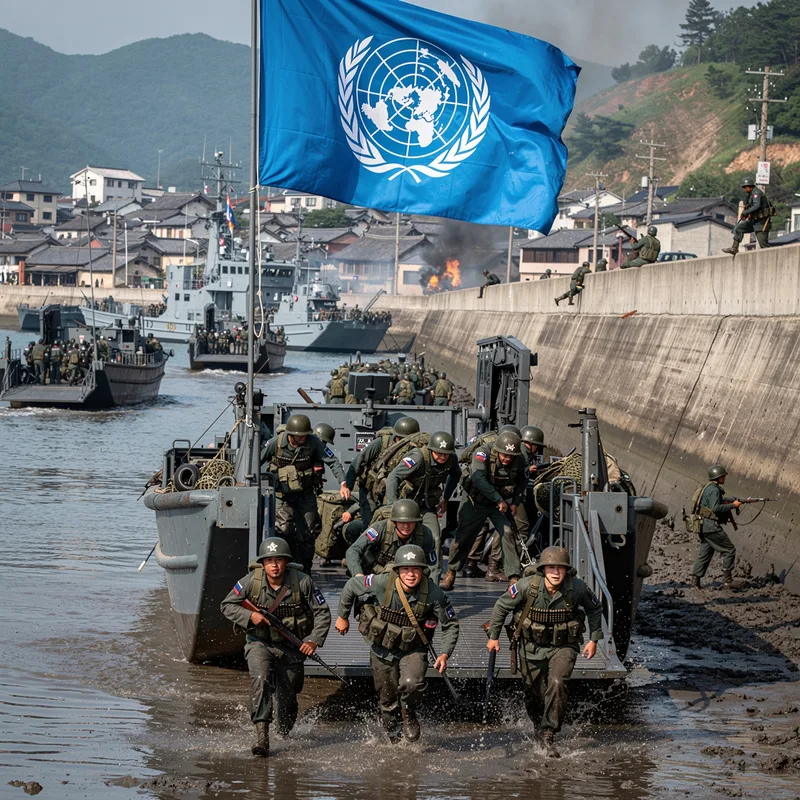
Inchon
 1
8.2

- proper noun
- /ˈɪnˌtʃɒn/
- Whiting wrote that China attacked because the United Nations forces followed their successful Inchon landing on September 15 by recapturing Seoul.
- Inchon landing
- amphibious landing at Inchon
- invasion of Inchon
Examples
-
In 1950, General Douglas MacArthur's landing at Inchon was a pivotal moment in the Korean War.
-
In mid-September, Mao sped up China's preparations after the United Nations forces landed at Inchon and recaptured Seoul.
Academic text (1998) -
General, I've read a little military history, and it's a pleasure to congratulate you on your success at Inchon.
-
On September 15, 1950, MacArthur launched a surprise landing at Inchon, on the northwest coast of South Korea.
Fiction book (2000) -
General of the Army Douglas MacArthur organized X Corps in August 1950 to carry out his plan to outflank the North Korean Army with an amphibious landing at Inchon.
Academic text (1995) -
The success of the Inchon operation allowed United States forces to recapture Seoul from North Korean troops.
-
During the Korean War, the Inchon landing marked a significant turning point in the conflict.
Synonyms

 1
7.8
A major 1950 battle when United States forces land from ships at Inchon and defeat North Korean troops
Compounds
1
7.8
A major 1950 battle when United States forces land from ships at Inchon and defeat North Korean troops
Surface Forms
Etymology
Inchon as the battle name comes from the city Incheon, because the attack began with a daring landing at that port. That's why the Battle of Inchon is named after the place and is remembered for the sea landing that changed the course of the war.