
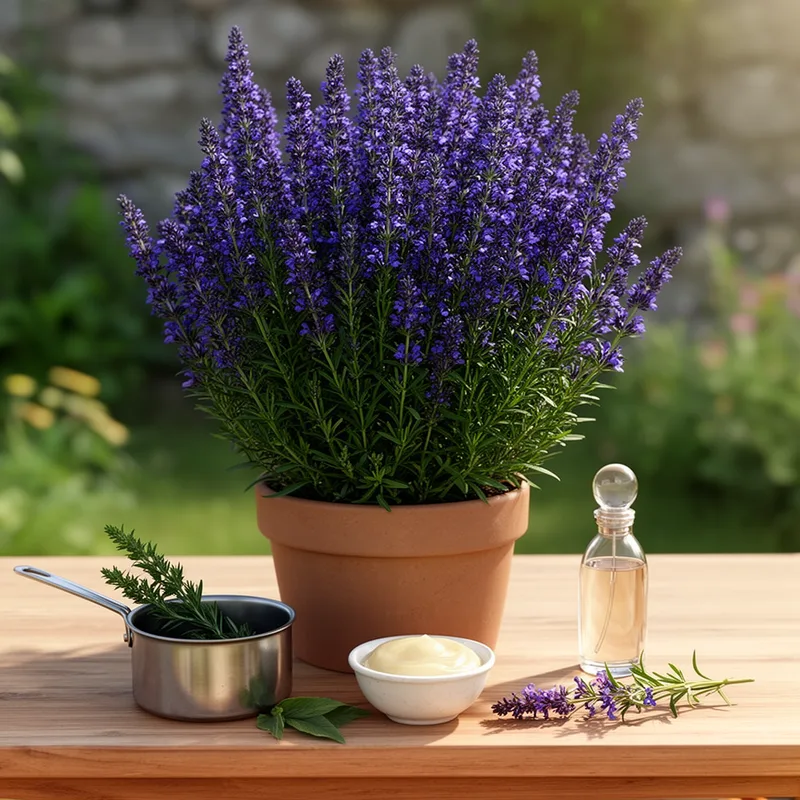
Hyssopus officinalis
- noun
- /ˈhɪsəpəs əˌfɪʃəˈnælɪs/
- Specialized
- The chef added a few leaves of Hyssopus officinalis to the sauce for a unique, aromatic flavor.
Examples
-
Gardeners often grow Hyssopus officinalis for its fragrant blue flowers and culinary uses.
-
Traditional remedies sometimes include extracts of Hyssopus officinalis to treat minor bruises and inflammation.
-
The Hyssopus officinalis plant thrives in sunny gardens.
-
Many chefs use Hyssopus officinalis to enhance flavor.
-
The chef added a few leaves of Hyssopus officinalis to the sauce for a unique, aromatic flavor.
-
Traditional remedies sometimes include extracts of Hyssopus officinalis to treat minor bruises and inflammation.
-
Gardeners often grow Hyssopus officinalis for its fragrant blue flowers and culinary uses.
Synonyms

 1
9.6
1
9.6

A small herb with a strong smell used to add flavor to food or make herbal tea
Surface Forms
Morphology
This is a standard botanical binomial combining the genus name 'Hyssopus' with the Latin adjective 'officinalis' (denoting medicinal use). A learner who knows both constituent meanings can directly infer it refers to the Hyssopus species used for medicinal/aromatic purposes, so the name is compositionally transparent.
Etymology
Hyssopus officinalis comes from old Greek and Latin words: Hyssopus was the name for a fragrant shrub and officinalis showed the plant was 'used in medicine' or sold in medicine shops. That's why the name points to a useful, aromatic herb still used for cooking, perfume, and simple remedies.