
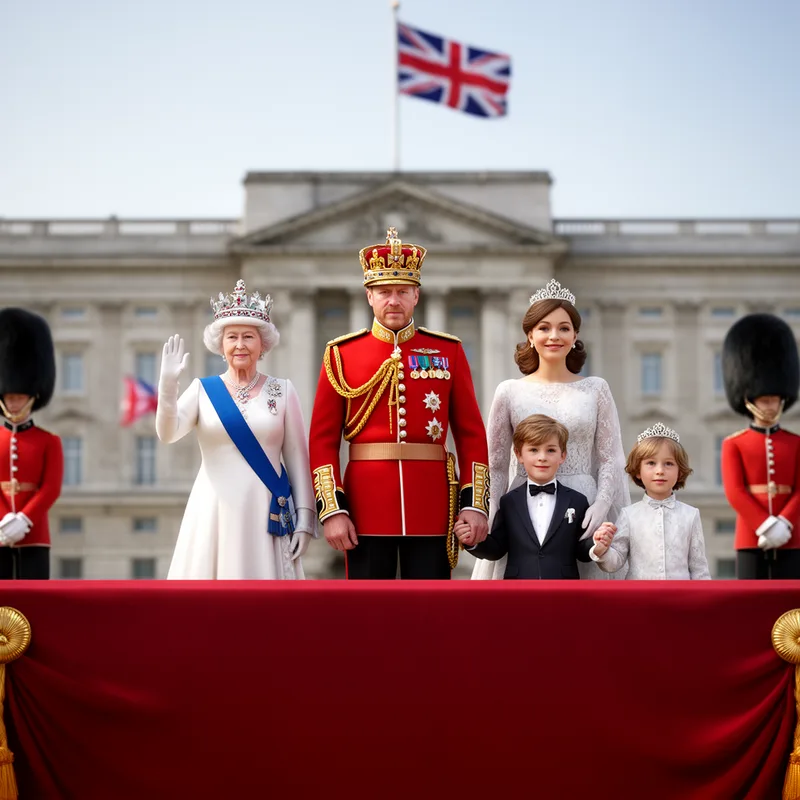
House of Windsor
 1
3.9
1
3.9

- proper noun
- However, a lot of British nobility, including the Royal House of Windsor, held and still hold considerable shares in Sinclair—now British Petroleum.
Examples
-
The documentary explored the history of the House of Windsor and its impact on British culture.
-
The women in the House of Windsor have generally been long lived and the men not so much.
-
Four generations of the House of Windsor.
-
It is Her Majesty and the House of Windsor I am pledged to serve.
-
The British royal family has been known as the House of Windsor since 1917.
-
Members of the House of Windsor often participate in public events throughout the year.
Synonyms
 61
1.8
61
1.8
Close relatives of a king or queen who rules a country
 43
6.9
43
6.9
The family of British kings and queens since 1917
 2
4.7
2
4.7
A family of kings and queens who rule a country now or in the past
 1
4.9
1
4.9
A family of kings and queens who are related by birth
Surface Forms
Morphology
The meaning is compositionally transparent: 'house' (a dynastic family line) combined with the proper name 'Windsor' directly yields the royal family called the House of Windsor. The 'House of X' naming pattern is cross‑linguistically common, so a B1 learner who knows the constituents would very likely infer the intended meaning.
Etymology
House of Windsor was chosen in 1917 by King George V. He dropped the old German family name and chose the English name Windsor, after Windsor Castle, so people would think of them as 'the royal family' of Britain, which is why the phrase now means the country's ruling family.