
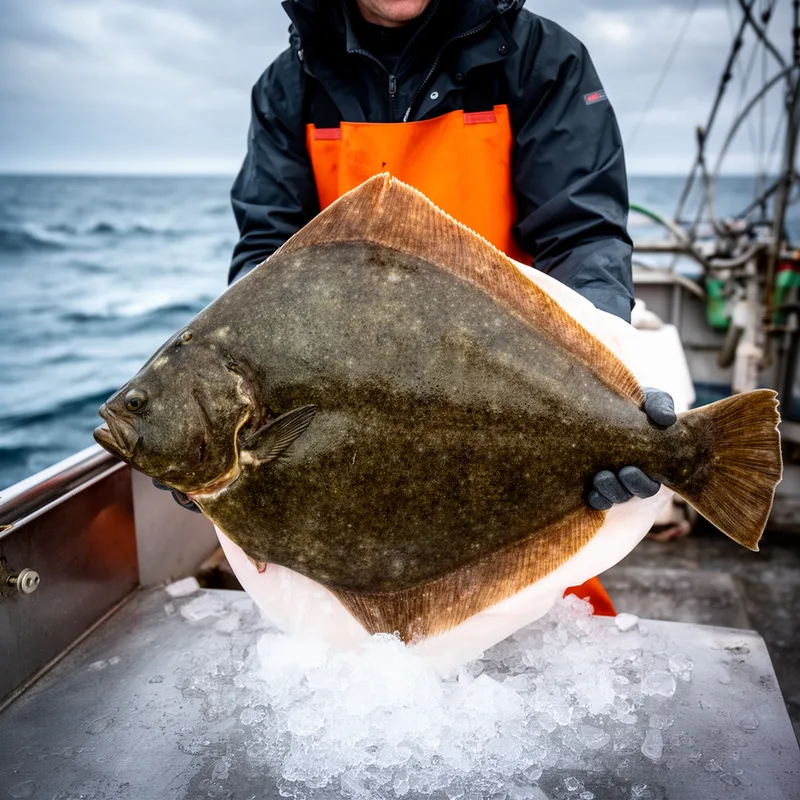
Hippoglossus hippoglossus
- noun
- /ˌhɪpəˈɡlɒsəs ˌhɪpəˈɡlɒsəs/
- Specialized
- Commercial fishing of Hippoglossus hippoglossus has declined due to overfishing in the North Atlantic.
Examples
-
The Hippoglossus hippoglossus can grow to impressive sizes, weighing several hundred pounds.
-
Marine biologists track Hippoglossus hippoglossus populations to monitor ocean health.
-
The chef prepared a delicious dish with Hippoglossus hippoglossus.
-
Many restaurants serve Hippoglossus hippoglossus during the summer.
-
Many restaurants serve Hippoglossus hippoglossus as a gourmet dish, praised for its rich flavor.
-
The Hippoglossus hippoglossus can grow to impressive sizes, reaching lengths of up to ten feet.
-
Commercial fishing of Hippoglossus hippoglossus has increased in recent years due to its popularity as a food fish.
Synonyms
 18
3.7
18
3.7

A large flat fish that lives in cold northern seas and is often eaten
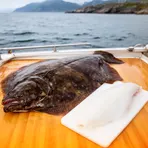
A large flat fish that lives in the North Atlantic and is eaten for its firm white flesh
Surface Forms
Morphology
This is a scientific binomial formed from the genus name; a learner who knows 'Hippoglossus' as a genus of large flatfish can infer the expression refers to a type of fish, so there is some compositional cue. However, identifying the precise referent 'Atlantic halibut' requires taxonomic knowledge beyond ordinary word-combination rules and is not predictable for a B1 learner, so the expression is only partially transparent.
Etymology
Hippoglossus hippoglossus comes from Greek words: hippo meaning 'horse' and glossus meaning 'tongue', because the fish's long flat body looks a bit like a large tongue. That's why this Latin name is used for the big flatfish we call the Atlantic halibut today.