
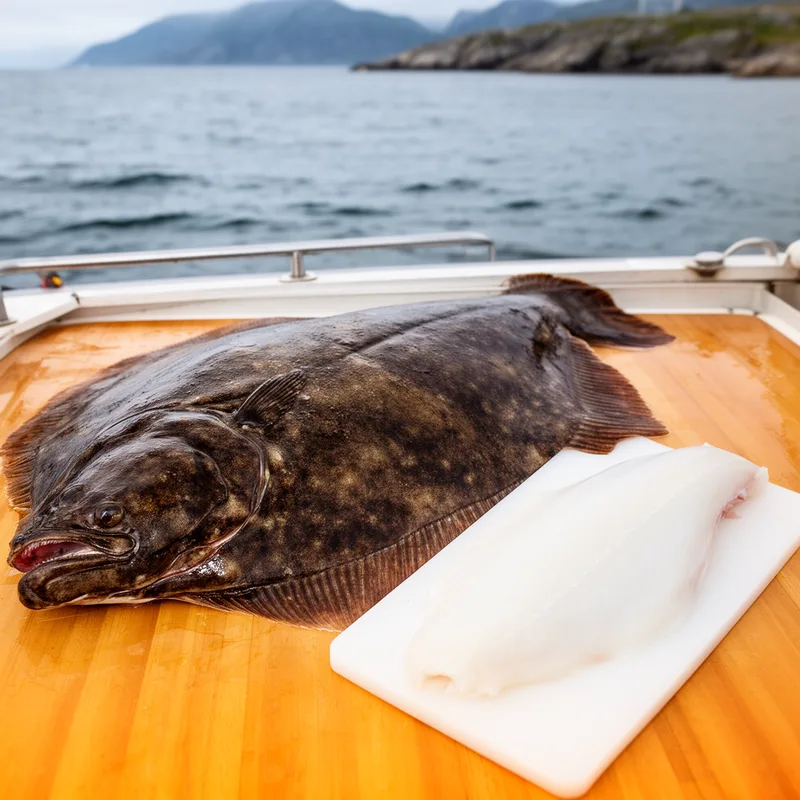
Atlantic halibut
- noun
- /əˈtlæntɪk ˈhæləˌbʌt/
- The Atlantic halibut is a popular dish in many seafood restaurants.
Examples
-
Overfishing has caused a significant decline in wild Atlantic halibut populations.
-
The Atlantic halibut is highly prized by commercial fishermen for its firm, white flesh.
-
A record-breaking Atlantic halibut was caught off the coast of Norway, weighing over 200 kilograms.
-
Many chefs prefer cooking with Atlantic halibut due to its rich flavor.
-
The chef recommended the grilled Atlantic halibut for its delicate flavor and flaky texture.
-
Many restaurants offer Atlantic halibut as a popular seafood choice on their menus.
-
Conservation efforts are underway to protect the Atlantic halibut population from further decline.
Synonyms

 18
3.7
18
3.7

A large flat fish that lives in cold northern seas and is often eaten

A large flat fish from the North Atlantic that people eat
Surface Forms
Morphology
The meaning is directly compositional: 'Atlantic' specifies the geographic origin (in or by the Atlantic) and 'halibut' names the fish species, so a learner who knows both words can infer it refers to halibut from the Atlantic. This modifier + noun pattern is a common, transparent construction cross-linguistically.
Etymology
Atlantic halibut gets its name from where the fish lives and an old word for a flat fish. One popular story says halibut comes from the old words holy and butt, because butt meant a flat fish and holy refers to church days when people often ate it, so the name came to mean the large flat fish found in the Atlantic.