
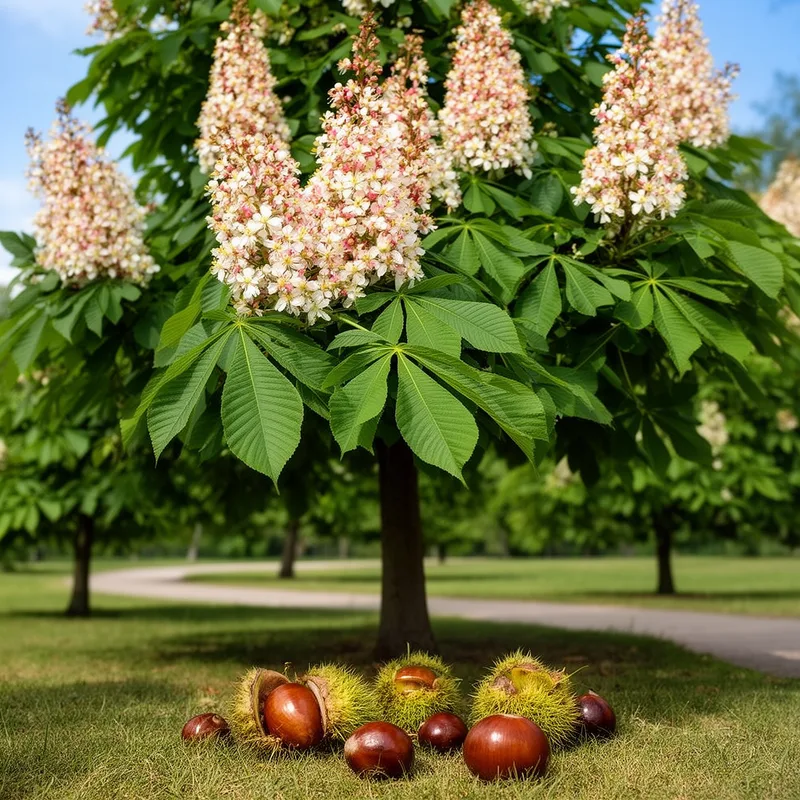
Hippocastanaceae
- noun
- /ˌhɪpəˌkæstəˈneɪʃiˌi/
- Specialized
 :
hipocastanácea
:
hipocastanácea
- The Hippocastanaceae family, which includes horse-chestnuts, is known for its showy flowers and distinctive seed capsules.
Examples
-
The Hippocastanaceae are best known for the ornamental horse-chestnut trees found in parks and gardens.
-
Researchers studied the dispersal methods of seeds produced by the Hippocastanaceae family.
-
Most members of the Hippocastanaceae have large, palmate leaves and attractive blossoms.
-
Look at the stunning flowers on the Hippocastanaceae trees!
-
The Hippocastanaceae family includes the beautiful horse-chestnut trees.
-
Many parks feature trees from the Hippocastanaceae, showcasing their large, decorative leaves and vibrant blooms.
-
In spring, the Hippocastanaceae trees attract attention with their colorful flowers and unique seed pods.
Synonyms
A group of trees like horse-chestnuts with large flowers and glossy inedible seeds in hard cases
Surface Forms
Morphology
Hippocastanaceae = Hippocastan (opaque) = Hippocastan + aceae
Scientific family-name suffix '-aceae' attached to a Latin name element is specialized and not transparent to average learners.
Etymology
The word Hippocastanaceae comes from Greek parts hippo- meaning 'horse' and kastan- meaning 'chestnut', plus the plant-family ending -aceae meaning 'family'. So Hippocastanaceae literally says 'horse-chestnut family' and names the group of trees like the familiar horse-chestnut, with big leaves, showy flowers, and nut-like seeds.

