

Hg
 3
6.9
3
6.9

- noun
- Specialized
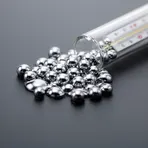
- Mercury, represented by the symbol Hg, is a toxic element found in thermometers.
- mm Hg
- blood Hg
- Hg concentration
Examples
-
PVS-10 can be used over any three-decade range from 10-2 mm Hg to atmosphere.
Academic text (1995) -
The British Hypertension Society recommends a target of 140/85 mmHg for patients who already have CHD.
Academic text (2012) -
There is about an 80% increase in stroke risk with every 10 mm Hg increase in the usual DBP.
Academic text (1995) -
The units are designed to provide 10 psi of maximum pressure and 25 in./Hg of maximum vacuum.
Academic text (1995) -
A pressure of 15 mm Hg, as found in fetal lambs, is more likely to be sufficient.
Academic text (1991) -
Hyperventilation, to maintain the arterial pCO2 between 27 and 30 mm Hg, has also been suggested.
Academic text (1995) -
The calibrator can be used in any four-decade range from 10-4 mm Hg to atmosphere.
Academic text (1995) -
However, heating at 73 mmHg (200 g) did not significantly change P m.
Academic text (1999) -
Even during control with only 3.7 mmHg pressure, there was a small but rapid displacement followed by a gradual creep.
Academic text (1999) -
BP readings were taken in each arm (to the nearest 2 mmHg) with standard mercury sphygmomanometers with 14-cm cuffs.
Academic text (2012)
Synonyms
 95
6.1
95
6.1
A heavy silvery metal that is liquid at room temperature and poisonous
 8
9.2
8
9.2
A heavy silvery liquid metal that is poisonous at room temperature

A heavy silvery metal that is liquid at room temperature and toxic

A heavy silvery metal that is liquid at room temperature and toxic
Compounds

Surface Forms
Etymology
Hg comes from the old Latin name hydrargyrum, made of Greek parts hydr- ('water') and argyr- ('silver'). That name means 'liquid silver', which helps you remember that mercury is a heavy, silvery metal that flows like a liquid at room temperature.