
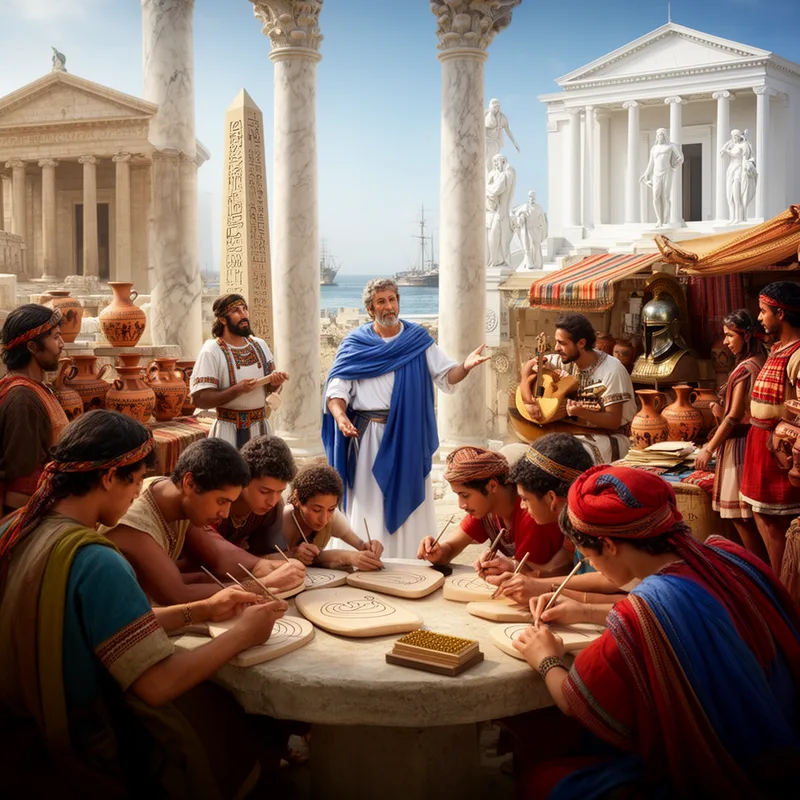
Hellenization


 1
8.8
- noun
- /ˌhɛlənɪˈzeɪʃən/
- The introduction of Hellenization greatly influenced the art and architecture of ancient Rome.
Loading YouTube…
Watch on YouTubeAnd saying, hey, if scholars like Harnack want to call this Hellenization, so much the worse for them.
- And saying, hey, if scholars like Harnack want to call this Hellenization, so much the worse for them.
Examples
-
And saying, hey, if scholars like Harnack want to call this Hellenization, so much the worse for them.
-
I think the world also doesn't accept abstract concepts as normative, but rather places great emphasis on lived experience, feelings, and interpersonal relationships (perhaps closer to the Hebrew worldview prior to the Hellenization of Christianity).
Blog text (32) -
The Hellenization of the region led to widespread use of the Greek language among the local population.
-
Scholars study the Hellenization process to understand how Greek customs were integrated into different cultures.
Synonyms
 1
9.8
A set of ideas, art, and culture from ancient Greece that spread to other regions
How Greek
1
8.8

- Archaic
1
9.8
Surface Forms
Morphology
Hellenization = Hellenize (transparent) = Hellen + ize + ation
Derived by regular noun formation from the verb 'Hellenize' (Hellen- + -ize); it denotes the process/state of making something Greek and is directly compositional.
Etymology
Hellenization begins with Hellen-, from Hellas, the Greek name for 'Greece', and ends with -ization, which means 'the process of'. So Hellenization is literally the process of 'making something Greek', which explains why it means the spread or adoption of Greek culture, language, or customs.