
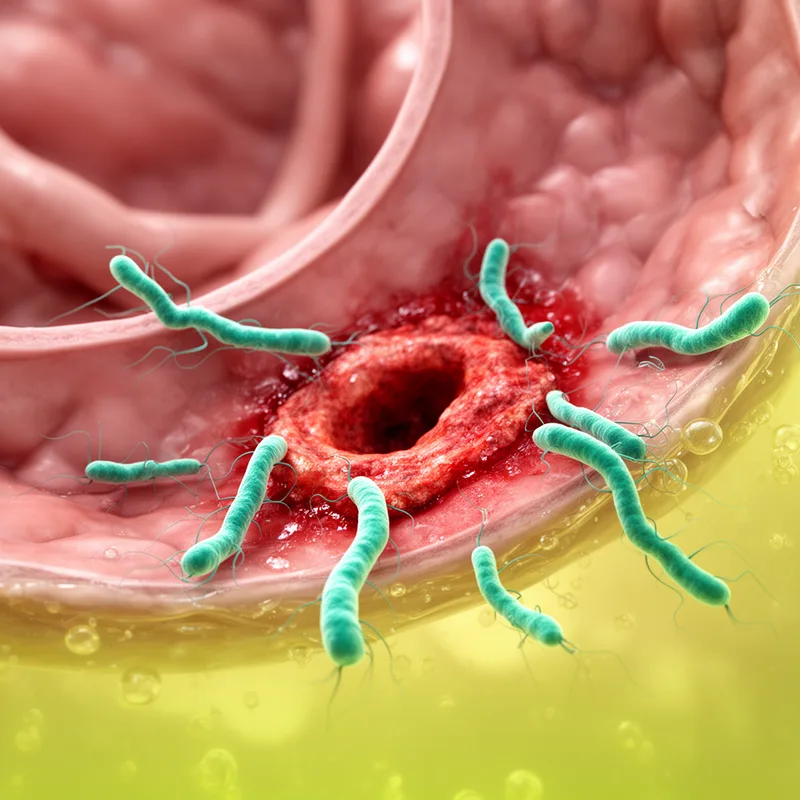
Helicobacter
 1
8.1

- proper noun
- /ˌhɛlɪˈkoʊbæktər/
- Specialized
- Doctors have found that about 60% of all stomach ulcers are caused by a pesky bug called Helicobacter pylori.
- Helicobacter pylori
Examples
-
I didn't want to pick one up because of H. pylori; H is Helicobacter.
Blog text (15) -
One theory is that people may be highly infectious for only a matter of days or weeks, and transmission may be via the fingers when coming into contact with infected vomit or stools (Figure 4) (Helicobacter Pylori Fact Sheet for Healthcare Providers, 1998).
Academic text (2005) -
Ever heard of Helicobacter pylori?
Blog text (25) -
And one example that seems to be rising right now is associations between Helicobacter and pregnancy sickness.
-
FIGURE 4. Helicobacter Pylori Fact Sheet for Healthcare Providers
Academic text (2005) -
So as you know, antibiotic resistance in bacteria of all sorts in all settings is a huge problem, and Helicobacter is no different.
-
One of Helicobacter pylori's most striking traits is its genetic diversity and adaptability.
-
Ulcers are almost always the product of a clever corkscrew-shaped organism called Helicobacter pylori, which can be eradicated with as little as two weeks of antibiotic therapy.
Compounds
- Specialized
1
3.7
A spiral-shaped bacterium that lives in the stomach and can cause stomach inflammation and ulcers
Surface Forms
Etymology
The word Helicobacter comes from old Greek parts helix 'spiral' and bacter 'rod' or 'small stick'. So the name means 'spiral rod', and this fits a group of stomach bacteria, such as Helicobacter pylori, that can cause gastritis and ulcers.