
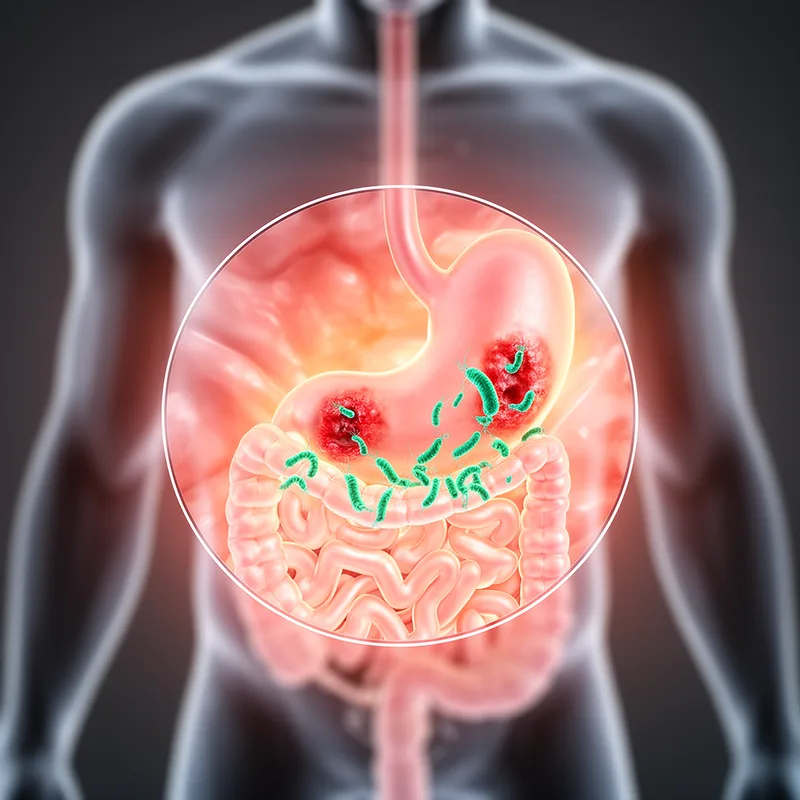
Helicobacter


 1
7.9
- noun
- /ˌhɛlɪˈkoʊbæktər/
- Specialized
- Helicobacter pylori Fact Sheet for Health Care Providers
- Helicobacter pylori
- Helicobacter pylori infection
Examples
-
The bacterium Helicobacter pylori is responsible for causing many stomach ulcers.
-
Many doctors recommend blood tests to check for Helicobacter infections in patients with digestive problems.
-
Atrophic Gastritis and Helicobacter pylori Infection
Academic text (2016) -
Overview of the symptoms of Helicobacter pylori infection in gastric X-ray images.
Academic text (2016) -
Good evidence exists that the presence of Helicobacter pylori increases the risk of ulcer bleeding with low-dose aspirin (5).
Academic text (2007) -
Some examples of these pathogens are Pseudomonas aeruginosa, Helicobacter pylori, and Escherichia coli.
Academic text (2005) -
Helicobacter pylori gastritis is most often seen in MALT lymphoma of the gastrointestinal tract.
Academic text (2008) -
Research suggests that Helicobacter pylori is linked to various stomach issues and can lead to more serious conditions.
Compounds
- Specialized
1
3.7
A spiral-shaped bacterium that lives in the stomach and can cause stomach inflammation and ulcers
Surface Forms
Etymology
The word Helicobacter comes from old Greek parts helix 'spiral' and bacter 'rod' or 'small stick'. So the name means 'spiral rod', which helps you remember that these bacteria are twisted like a corkscrew and can live in the stomach and cause digestive problems.