

Gyromitra
- noun
- /ˌdʒaɪrəˈmɪtrə/
- Specialized
- Some species in the genus Gyromitra are poisonous and can be mistaken for edible morels.
Examples
-
The distinctive lobed appearance of Gyromitra makes it recognizable among wild mushrooms.
-
Many foragers avoid Gyromitra due to its toxicity.
-
Researchers studied the toxins present in Gyromitra to understand their effects on human health.
-
The Gyromitra mushroom is often mistaken for true morels.
-
Some species in the genus Gyromitra are poisonous and can be mistaken for edible morels.
-
Researchers studied the toxins present in Gyromitra to understand their effects on human health.
-
Many foragers avoid Gyromitra due to its toxicity.
Compounds
- Specialized
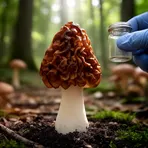
A brown wild mushroom with a wrinkled cap and white stem that may be poisonous

- Specialized
A brown wild mushroom with a wrinkled cap and thick stalk that can be poisonous if eaten

- Specialized
A poisonous mushroom with a wrinkled, brain-like cap often mistaken for edible morels
- Specialized
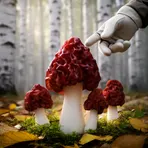
A wild mushroom with a deep reddish brown cap and a white stem that can be toxic

- Specialized
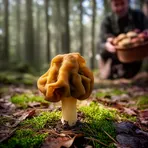
A large often poisonous mushroom like a morel with a wrinkled yellow-brown cap and uneven stalk that grows in spring

- Specialized
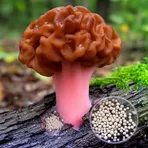
A false morel with a brown rounded cap and rosy folded stalk that grows on dead wood
- Specialized
A brown mushroom with a pink stem and smooth round spores that grows on wood
Surface Forms
Etymology
The word Gyromitra comes from the Greek parts gyro ('turn' or 'round') and mitra ('cap' or 'headband'). So it literally means a 'twisted cap', which is a good image for these wild, morel-like mushrooms with lobed caps, some of which are poisonous.

