
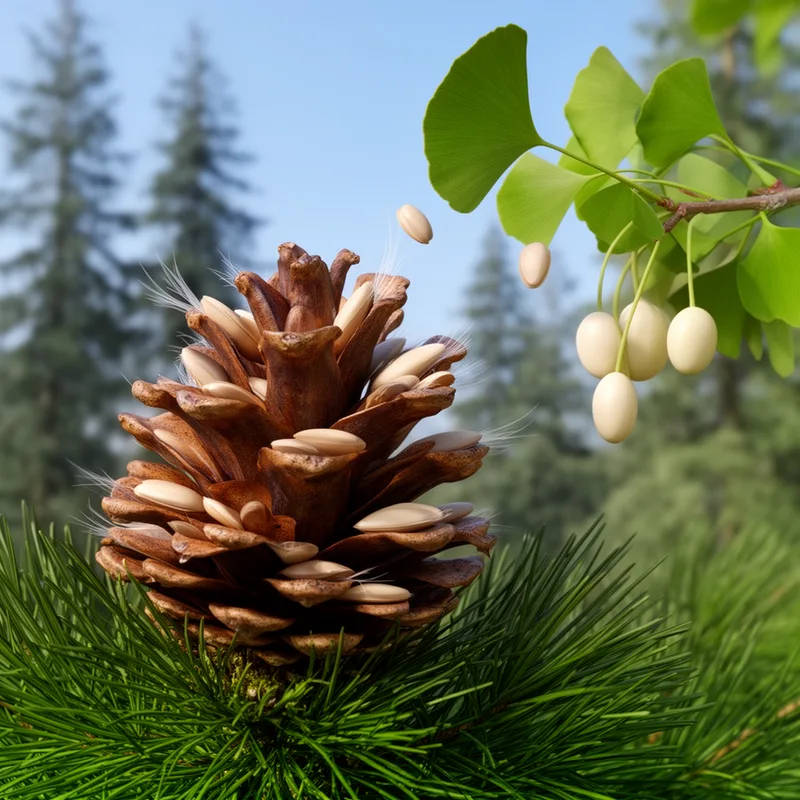
Gymnospermae
- noun
- /ˌdʒɪm.nəˈspɜr.mi/
- Specialized
- Biologists study Gymnospermae to understand how plants with naked seeds evolved.
Examples
-
Pine trees, which belong to the Gymnospermae, reproduce using cones rather than flowers.
-
The division Gymnospermae includes well-known species such as fir, spruce, and ginkgo.
-
The Gymnospermae include plants like pine and spruce.
-
Many Gymnospermaes are adapted to cold climates.
-
Biologists study Gymnospermae to understand how plants with naked seeds evolved.
-
The division Gymnospermae includes well-known species such as fir, spruce, and ginkgo.
-
Pine trees, which belong to the Gymnospermae, reproduce using cones rather than flowers.
Synonyms
Plants that have seeds not inside a fruit, like pine or fir trees
Surface Forms
Morphology
Gymnospermae = gymnosperm (opaque) = gymno + sperma + ae
The relation from the English singular 'gymnosperm' to the Latin plural '-ae' form is a straightforward pluralization of a taxonomic name but relies on specialized scientific/Latin conventions.
Etymology
Gymnospermae comes from two old Greek words: gymnos meaning 'naked' and sperma meaning 'seed', so it names plants with 'naked seeds' that are not inside a fruit. That's why pines and firs, which make seeds in cones instead of flowers, are called Gymnospermae.

