
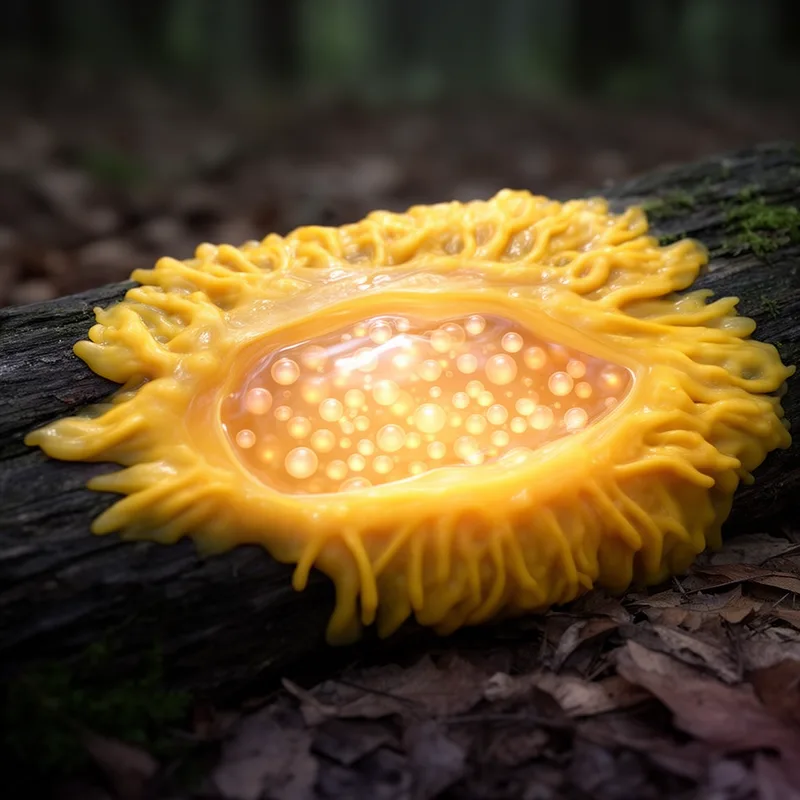
Gymnomycota
- noun
- /ˌdʒɪmnoʊˈmaɪkəˌtə/
- Specialized
- Researchers are studying the genetic diversity within Gymnomycota to better understand the evolution of slime molds.
Examples
-
The Gymnomycota display a unique life cycle distinct from true fungi.
-
In some modern classifications, Gymnomycota is considered part of the kingdom Protoctista rather than Fungi.
-
The Gymnomycota thrive in nutrient-rich environments.
-
Many researchers are focused on Gymnomycota and their unique life cycles.
-
In modern biology, Gymnomycota are classified separately due to their unique life cycle.
-
Scientists have observed that Gymnomycota exhibit characteristics different from traditional fungi.
-
The research team discovered new species within the Gymnomycota, expanding our understanding of slime molds.
Synonyms


 1
9.9
A group of slime molds that live as a single soft mass and make spores
Surface Forms
Morphology
Gymnomycota = gymno + mycota
A technical taxonomic formation from Greek combining forms ('gymno-' + '-mycota') that a typical B1 learner would not be able to interpret from its parts.
Etymology
Gymnomycota comes from Greek parts gymno- meaning 'naked' and mycota meaning 'fungus'. Think of gymno- like in gymnasium, where athletes once trained 'naked'; Gymnomycota are 'naked fungi' because their spore parts are exposed, which helps explain why slime molds are different from true fungi.