
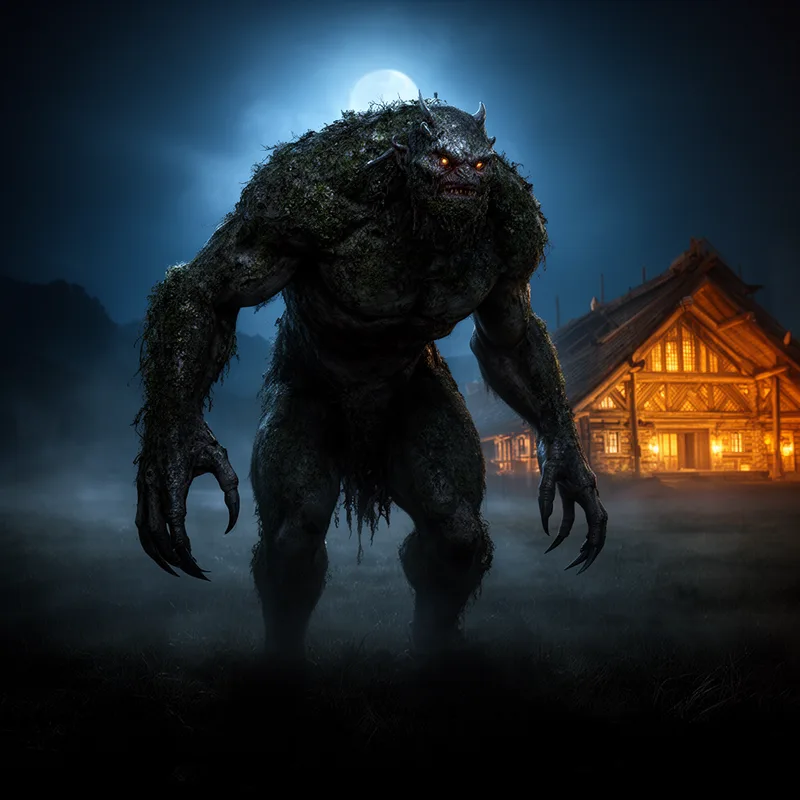
Grendel
 14
9.9
14
9.9

- proper noun
- /ˈɡrɛndəl/
- Literature
- In this section of the poem, the monster Grendel has been terrorizing the Scyldings, a warrior tribe led by King Hrothgar.
- the monster Grendel
- Grendel in Beowulf
- Grendel's mother
Loading YouTube…
Watch on YouTubeThink about the if those of you who have read Beowulf, you know, you have Grendel, who's clearly not a normal kind of foe, Grendel's mom, who's even worse than Grendel.
- Think about the if those of you who have read Beowulf, you know, you have Grendel, who's clearly not a normal kind of foe, Grendel's mom, who's even worse than Grendel.
- If we're going to call other things epics like say, Beowulf, Grendel is a son of Cain and there's a biblical reference there.
Examples
-
The book told the story of Grendel, the monster from the Old English epic of Beowulf.
Fiction book (2000) -
Grendel lives with his mother at the bottom of a pool filled with fire-snakes.
Fiction book (1999) -
So you brought back the head of Grendel.
-
I fought the monster Grendel with no armor, and that is how I'll fight you.
-
In the Anglo-Saxon poem Beowulf, Grendel is a monster who terrorizes a tribe called the Seyldings, who are led by King Hrothgar.
Fiction book (1999) -
In the epic poem Beowulf, the hero Beowulf faces the monstrous creature Grendel in a fierce battle.
-
The tale of Grendel is a central part of the Old English epic, showcasing his struggle against humanity.
-
Many scholars discuss Grendel's character as a symbol of fear and evil in the context of the poem Beowulf.
Antonyms


Surface Forms
Etymology
Grendel is the name of the monster defeated by Beowulf in the old poem 'Beowulf', and it comes from Old English though we do not know its exact original meaning. Because it was a fierce, night-attacking creature, the name now stands for a terrifying monster.