

Greater Maghreb
- proper noun
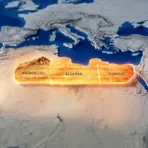
- The Greater Maghreb includes several countries, such as Morocco, Algeria, and Tunisia, each with its unique traditions.
Examples
-
Trade across the Greater Maghreb has influenced the culture and languages of North Africa.
-
Environmental policies in the Greater Maghreb are shaped by its unique climate and geography.
-
Many historians study the ancient civilizations that thrived in the Greater Maghreb region.
-
The Greater Maghreb is known for its rich history.
-
Many tourists visit the Greater Maghreb every year.
-
The diverse cultures of the Greater Maghreb reflect its historical connections with Europe and the Middle East.
-
Agriculture in the Greater Maghreb is significantly influenced by the region's Mediterranean climate.
Synonyms
 4
7.9
4
7.9

A region in northwest Africa that includes Morocco, Algeria and Tunisia


 1
8.6
1
8.6
A region in northwest Africa including Morocco, Algeria and Tunisia with a shared culture
Surface Forms
Morphology
The meaning is directly compositional: 'Greater' (larger/extending beyond a core area) modifies 'Maghreb' (Northwest Africa), so the phrase denotes an extended or larger Maghreb region. The 'Greater + place' pattern is common across languages and in geographic names, so a B1 learner who knows both constituents would readily infer the MWE's meaning.
Etymology
Greater Maghreb comes from Maghreb, an Arabic word that literally means 'the west' or 'where the sun sets' because it sits to the west of the Arab lands. So, Greater Maghreb simply means the larger region in northwest Africa made up of Morocco, Algeria and Tunisia.