
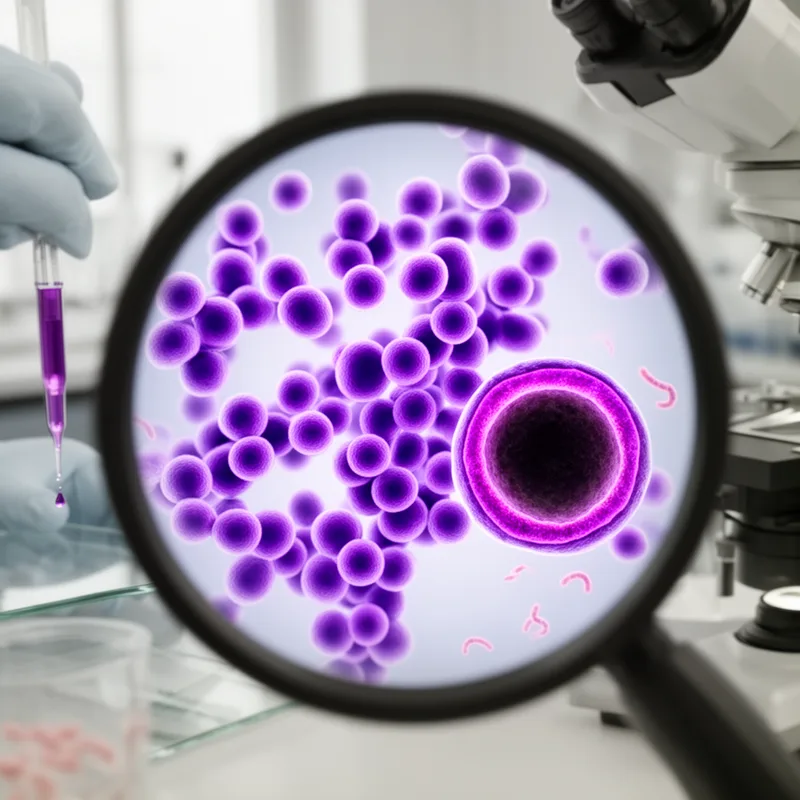
Gram-positive
 1
6.7

- adjective
- /ˈɡræmˌpɑːzɪtɪv/
- Specialized
- Gram-positive organisms are better suited to invade host tissues than gram-negative organisms.
- Gram-positive bacteria
- Gram-positive cocci
- Gram-positive organisms
Examples
-
Sepsis may be caused by gram-positive, gram-negative, and polymicrobial infection. Gram-negative infection most often occurs in the lungs.
Academic text (2017) -
To this end, investigations made during this study indicated that microorganisms were Gram-positive motile rods along with a double zone of hemolysis on blood agar.
Academic text (2014) -
Gram-positive organisms account for 96% of the bacteria recovered from the healthy ear.
Academic text (2005) -
Dalbavancin increases our options for gram-positive SSSI infections, but these issues should be addressed.
Academic text (2014) -
The antimicrobial susceptibility of the more common gram-positive organisms was also determined (Table 3).
Academic text (2003) -
Gram-positive bacteria are isolated in 61% of cases, gram-negatives in 36%, and yeast in 5%.
Academic text (2005) -
A Gram's stain of the sinus contents identified gram-positive cocci and yeast.
Academic text (2006) -
Some of the most serious non-nosocomial infections are those caused by airborne Gram-positive bacilli (e.g., Bacillus anthracis).
Academic text (2003) -
The normal flora may include streptococci and staphylococci among the gram-positive organisms, and Haemophilus influenzae, Neisseria species, and Moraxella species among the gram-negatives.
Academic text (2005) -
The laboratory identified several gram-positive bacteria in the patient's blood culture.
Antonyms
- Specialized
2
6.8
Bacteria that do not keep a purple Gram stain and often resist some antibiotics
Surface Forms
Morphology
Etymology
Gram-positive is named after the Danish scientist Gram, who invented a lab method to colour bacteria. The part positive means 'showing the purple stain' because these bacteria keep the dye due to a thick cell wall, so the name tells you how they look in the test.