
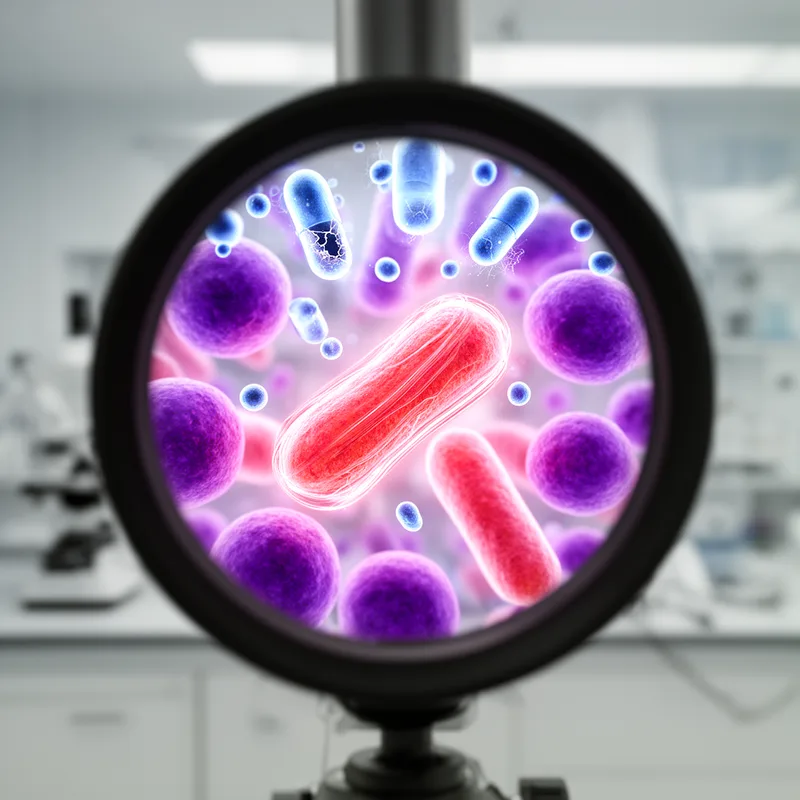
Gram-negative
 2
6.8

- adjective
- /ˈɡræmˌnɛɡətɪv/
- Specialized
- Endotoxin is a structural component found in the outer cell wall of Gram-negative bacteria.
- Gram-negative bacteria
- Gram-negative bacilli
- Gram-negative rods
Examples
-
Endotoxin is a structural component found in the outer cell wall of Gram-negative bacteria.
-
In 7 of 8 VAP patients, gram-negative microorganisms were recovered via endotracheal aspirate.
Academic text (2007) -
The mortality caused by VAP increases if it is caused by gram-negative bacilli.
Academic text (2007) -
His main interests include the genetics and molecular epidemiology of resistance in gram-negative rod-shaped bacteria.
Academic text (2015) -
"A rise in vaginal pH typically indicates an overgrowth of gram-negative bacteria," says Dezzutti.
Academic text (2014) -
The predator cell invades and grows within a specific compartment found in Gram-negative cells, the periplasm.
Academic text (2017) -
LPS is a hallmark of Gram-negative bacteria and the ligand for Toll-like receptor 4 (TLR4).
Academic text (2018) -
Vibrio vulnificus is a motile, halophilic, rod-shaped gram-negative pathogen that lives in estuarine environments (1).
Academic text (2015) -
LPS is a hallmark of Gram-negative bacteria and plays a crucial role in immune response.
-
"A rise in vaginal pH typically indicates an overgrowth of Gram-negative bacteria," says Dezzutti.
Antonyms

- Specialized
1
6.7
Bacteria that keep a purple stain when scientists stain them in a lab because they have a thick cell wall
Surface Forms
Morphology
Etymology
Gram-negative is named after the scientist Gram, who made a simple staining test, and negative means 'not'. In that test these bacteria do not keep the violet dye, so 'Gram-negative' tells us they are 'not' stained, which explains the term's modern meaning.