

Gossypium thurberi
- noun
- Specialized
- In southern Arizona, Gossypium thurberi is valued for its hairy leaves and ornamental value.
Examples
-
The botanical garden displays a beautiful specimen of Gossypium thurberi near its desert plants exhibit.
-
Researchers studied the drought resistance of Gossypium thurberi to improve cotton cultivation.
-
In southern Arizona, Gossypium thurberi is valued for its ability to thrive in arid conditions.
-
The Gossypium thurberi thrives in arid conditions.
-
Many gardeners appreciate Gossypium thurberi for its unique foliage.
-
The botanical garden showcases Gossypium thurberi as a stunning addition to its collection of desert plants.
-
Many gardeners choose Gossypium thurberi for its attractive appearance and ability to thrive in dry environments.
Synonyms

A wild bush with white soft fibers around its seeds used to make cloth
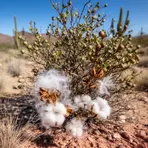
A shrub that grows in southern Arizona and Mexico and has seed pods with soft fibers like cotton
Surface Forms
Morphology
Gossypium + thurberi
Knowing 'Gossypium' (the cotton genus) lets a learner infer this is a cotton plant, so part of the meaning is recoverable; however 'thurberi' is a Latin species epithet (likely a proper name) with no independent lexical meaning that would indicate 'shrub native to Arizona and Mexico'. Because only the genus meaning is transparent while the species element and the specific distribution/ornamental details are not derivable, the expression is partially but not fully predictable to a B1 learner.
Etymology
Gossypium thurberi gets its name from two parts: Gossypium, an old word for 'cotton', and thurberi, which honors a botanist named Thurber who studied plants in the American West. So the name tells us this is a kind of cotton shrub and that it was named after the scientist who worked with it.

