
Germanization


 1
8.2
- noun
- /ˌɡɜrmənaɪˈzeɪʃən/
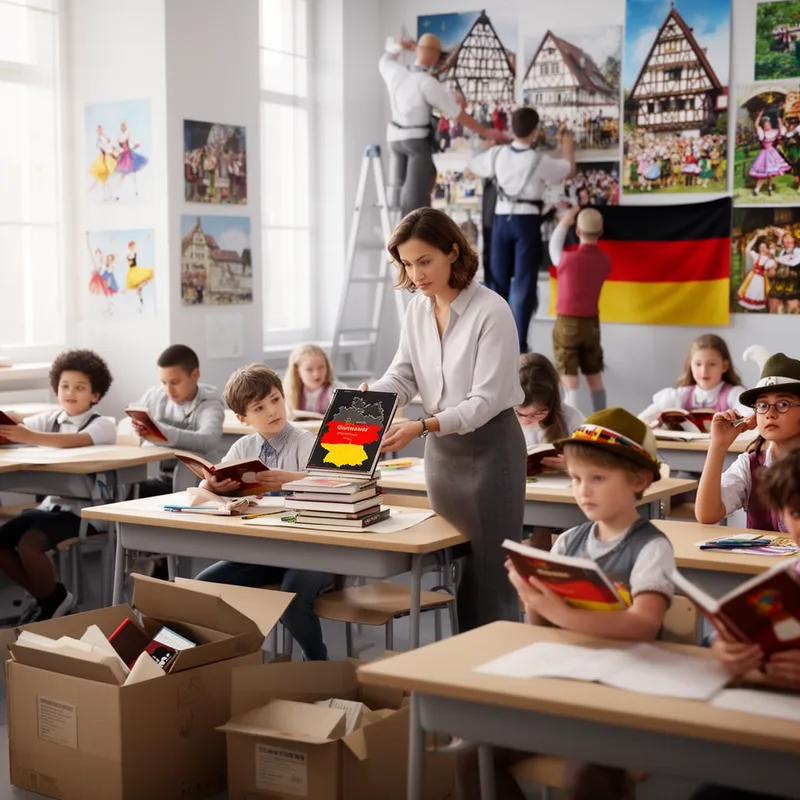
- The government introduced new policies aimed at the Germanization of local schools to promote the German language and culture.
Examples
-
During the early 20th century, many regions experienced a rapid Germanization that transformed their cultural identities.
-
Schuselka opposed Magyarization with Germanization, in that he suggested German as the best administrative language for Hungary.
Academic text (2016) -
It’s a photo of children rejected from the Germanization program.
-
One can trace through Mitchell's pages—and through numerous other sources in far greater detail—their gradual Germanization of the institutions and culture of the local world itself.
Academic text (1991) -
The artist's work reflects the Germanization of traditional themes, integrating elements of German folklore into modern art.
Surface Forms
Morphology
Etymology
Germanization comes from German plus the endings -ize and -ation, where -ize means 'make' and -ation means 'the act of'. So Germanization is the process of 'making' people, places, or customs more German in language and culture.