
Germanism
- noun
- /ˈɡɜrmənˌɪzəm/
- He begins a second phase, where he begins to emphasize his Judaism less and his germanism more.
Loading YouTube…
Watch on YouTubeIndia is a phenomenal history of migrant labour, still today, an interesting aspect of Indian Germanism.
- India is a phenomenal history of migrant labour, still today, an interesting aspect of Indian Germanism.
Examples
-
Indeed, Hungaro-Germanism during the 1848 Revolution suggests instead that both Magyar and Slav patriots clung more passionately to linguistic nationalism than Hungary's Germans.
Academic text (2016) -
Many aspects of local architecture reflect Germanism, with charming buildings that highlight traditional German design.
-
Hungaro-Germanism during the Hungarian Civil War.
Academic text (2016) -
March 1848: Hungaro-Germanism in the Revolutionary Moment
Academic text (2016) -
Hungaro-Germanism, however, suggests an alternative narrative of German multiethnic tolerance.
Academic text (2016) -
Proponents of multiethnic Hungaro-Germanism unsurprisingly rejected Magyarization.
Academic text (2016) -
Evidently, Hungaro-Germanism was to serve as a counterweight to Magyar revolutionary patriotism.
Academic text (2016) -
From 1871 onwards, when Pan-Germanism was actively promoted by the now-united motherland, the Lutheran Church itself tended to confuse faith and Germanism.
Academic text (2007) -
Particularly when contrasted with Magyar chauvinism, Hungaro-Germanism undermines the widespread assumption that German nationalism developed along archetypically or even unusually intolerant lines.
Academic text (2016) -
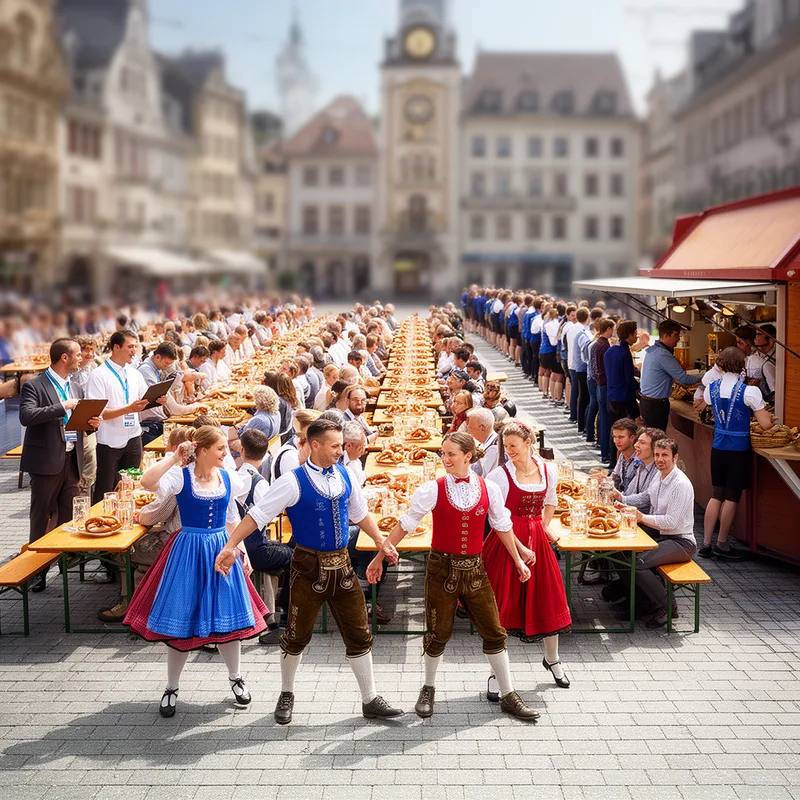
The festival featured various traditions rooted in Germanism, showcasing food and music typical of German culture.
Compounds

Surface Forms
Morphology
Etymology
Germanism comes from German and the ending -ism, where -ism means 'a practice' or 'a way of doing things'. So a Germanism is a custom, habit, or characteristic that is typical of Germany or its people.

